How to leave the bedside: read the posting, then the years
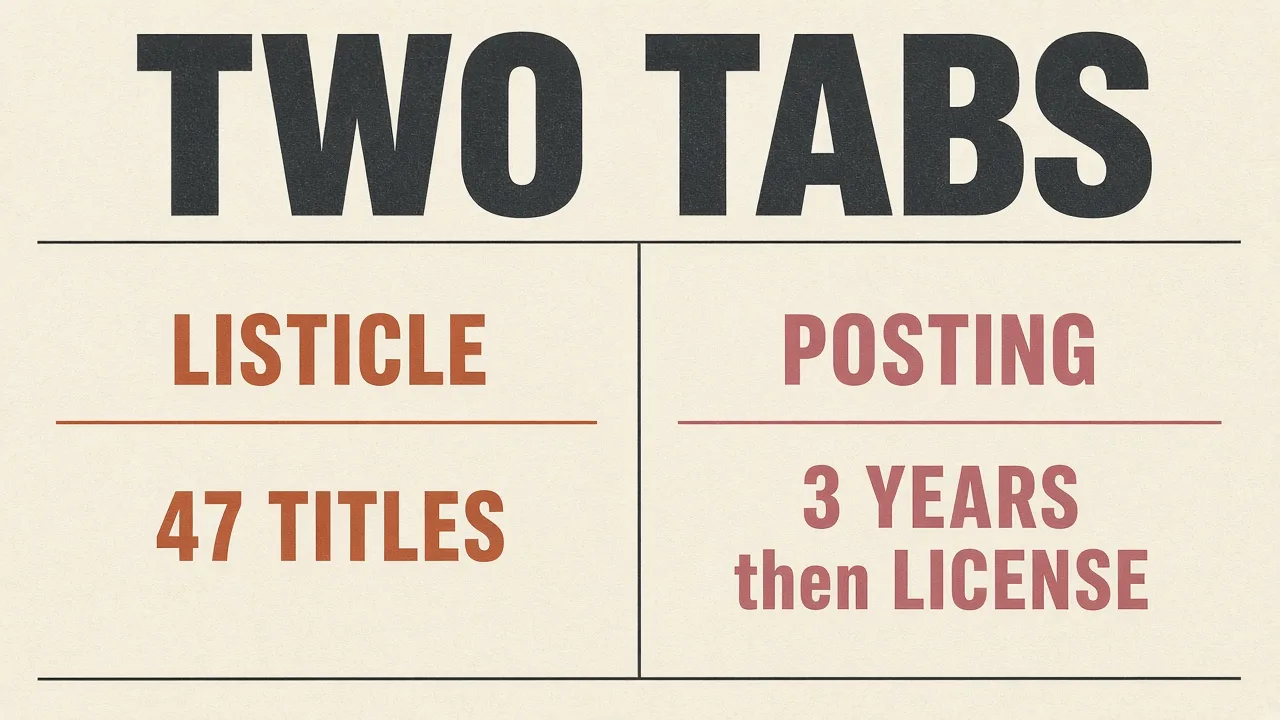
Leaving the bedside is a posting, not a listicle. Case management, utilization review, quality, informatics, and professional development share a license. They do not share a Tuesday. A Pittsburgh lounge tab with forty-seven titles will skip the three acute-care years and the CCM line a western Pennsylvania shop actually printed. Fourteen months of nights will not become three years because a charge weekend felt long.
This guide is four job families, how to read a posting, and the hours that still gate letters. Remote chairs live on the member has a state. Specialty stamps that match a unit you already work live on common credentials. Compact travel lives on home state and the 60-day rule.
How to leave the bedside without shopping 47 titles
Search results love the word ultimate. They also love “transition.” Both words hide a filter. A hospital case-management shop, a payer utilization queue, a quality office, an informatics build, and a professional-development classroom are not one career. They share a license. They do not share a Tuesday. If you cannot say which reader will pay you, you are still shopping titles.
Close the forty-seven-title tab. Keep the posting. Write the required lines on paper. If a line is a year count you do not have, the honest move is to stay on the unit long enough to earn it, or to find a posting that names the years you actually hold. Stretching fourteen months into “about two years” is how people get a silent rejection and a story about the market.
Non-clinical still means nurse
The Bureau of Labor Statistics still counts most of this work as registered nursing. The occupational handbook is blunt: some nurses do not work directly with patients, but they must still have an active registered nurse license. The examples BLS names are nurse educators, healthcare consultants, and hospital administrators. Read that sentence on the BLS registered nurses handbook. It is not a porch-laptop promise. It is a license sentence.
BLS also prints where the jobs actually sit. In 2025, hospitals employed 59 percent of registered nurses. Ambulatory services held 19 percent. Nursing and residential care held 6 percent. Government, outside state and local education and hospitals, held 5 percent. A desk inside a hospital is still a hospital job. A quality office down the hall from the unit you left is not a new occupation. It is a different room in the same building.
The Occupational Requirements Survey is the other public number people skip when they equate “non-clinical” with “remote.” In 2025, telework was routinely allowed for 1.1 percent of registered nurses. That figure is the whole RN occupation, most of it still bedside. It is not a forecast for payer jobs. It is a warning against treating a porch photo as the default. If a posting is remote, the posting will say so. If it does not, plan a badge and a parking garage.
If you do not yet hold the license, you are in the wrong article. Finish an approved program. Sit the exam the board named. Start with how to become a nurse in the U.S.. If the next exam is still TEAS or HESI, you do not have a bedside to leave.
Four families, not forty-seven
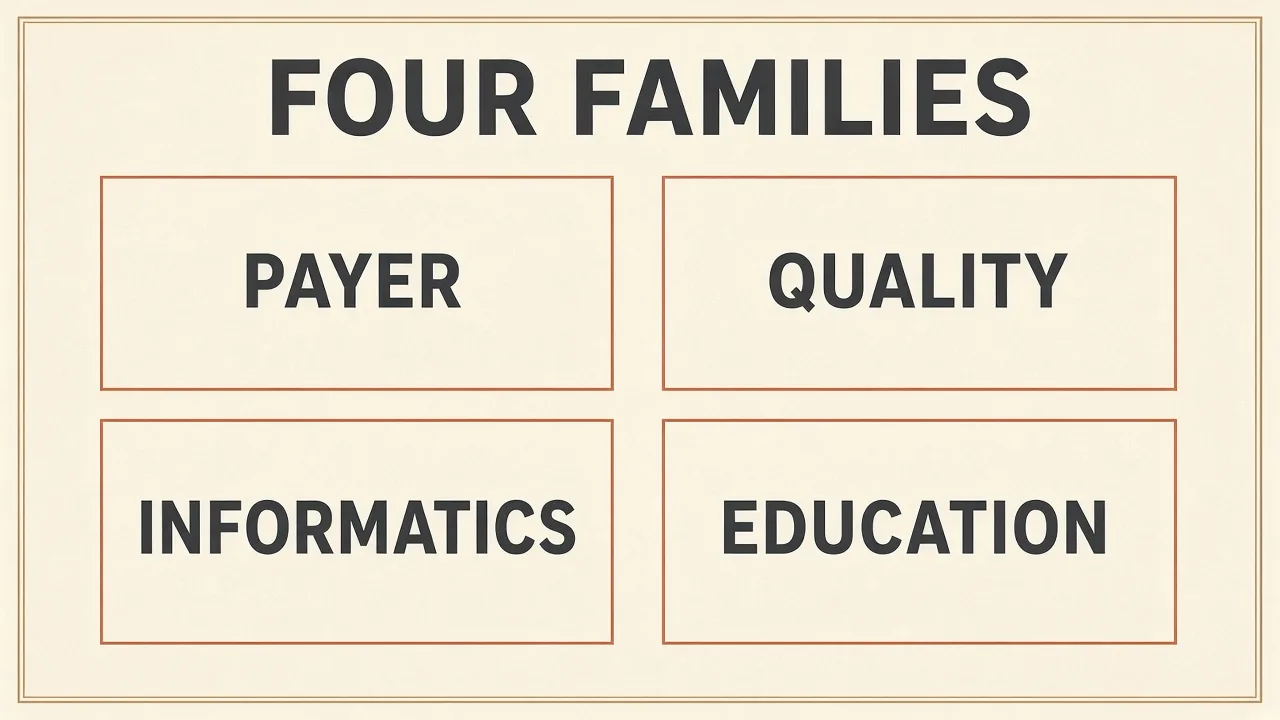
You do not need forty-seven titles. You need a family, because postings inside a family share a reader and a kind of proof. We will keep four. This is a method, not a catalog. Titles inside each family move. The proof does not.
- Payer and coordination. Case management, care coordination, utilization management, prior authorization. The reader is a hospital discharge shop or a health plan. The work is a panel or a review queue. ANA’s public explainer on utilization management nurses says the job reviews records, tests a plan against a guideline, and talks to insurers about authorization and denials. Prospective, concurrent, and retrospective are three clocks, not three personalities. Read ANA’s utilization management page.
- Quality and safety. Quality improvement, infection prevention, patient-safety, HEDIS abstraction. The reader is a hospital quality office or a plan’s measure shop. The work is a chart, a denominator, and a meeting. You still need the clinical eye that knows why a note is missing.
- Informatics. Build, train, optimize, ticket. The reader is an information-systems department that wants a nurse who has lived inside the record. Clicking around on night shift is not 2,000 informatics hours. ANCC’s informatics exam is later, and it wants those hours named. Read ANCC’s informatics nursing page.
- Education and professional development. Unit educator, residency faculty, professional-development specialist. The reader is a nursing education office. The work is a classroom, a skills lab, and a new-graduate who is scared of a pump. You are still a nurse. You are just standing on the other side of orientation.
Legal consulting, occupational health, research, and public health exist. They are not a fifth family on this page because they are later doors with their own readers. If you cannot name the family, you are still on the listicle.
How to read the posting
A posting is a filter written by someone who will be blamed if you cannot do the work. Read it the way you read a medication order. Required is required. Preferred is a wish that can wait. Internal-only means you are not in the room yet.
| The line | What it is doing |
|---|---|
| Current unencumbered RN | The license is the door. A lapsed license is not a personality issue. It is a no. |
| Two or three years of acute care | ANA’s UM explainer treats two to three years as the typical floor for that family. Your fourteen months will not become three because you want out. |
| Compact or a named state license | The charts have a state. A Pittsburgh desk that reviews Ohio members is not a hobby. Confirm who must be licensed where. |
| CCM preferred | You can often apply without it if the years match. Preferred is not a secret required. |
| BSN required | The associate degree that got you the unit may not get you this desk. That is a local filter, not a national law. |
| Remote or hybrid | Believe the word only if it is on this posting. Do not import it from a different employer’s career-page photo. |
Ask HR whether “three years” is calendar years or 6,000 hours. Ask whether travel contracts count. Ask whether the compact privilege is enough if you still live in another state. Get the answer in email. A recruiter’s “we’re flexible” is not the offer letter.
We will not invent a national desk wage. BLS publishes one occupational median for registered nurses. That number is not a case-management offer in Pittsburgh, a utilization queue in Louisville, or a quality office in Memphis. The offer letter is the wage. The listicle salary is a guess with a stock photo.
Hours still gate the letters
People treat a desk credential as a shortcut around the years. The certifiers do not. Two public handbooks are enough to kill that idea. Do not carry one handbook into the other.
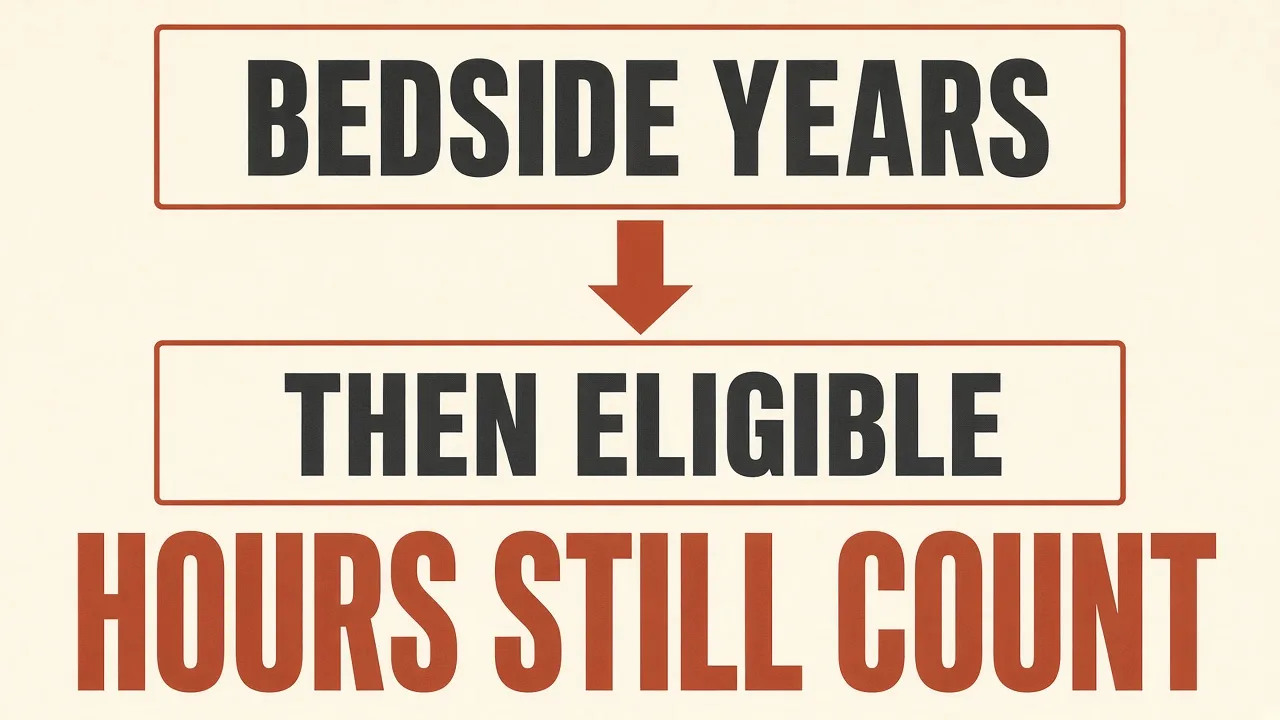
The Commission for Case Manager Certification sells CCM. An RN license is one way to meet the education category. Then you still need employment in case management. The public “at a glance” page names three doors: twelve months of full-time case management supervised by a CCM, twenty-four months of full-time case management without that supervisor rule, or twelve months supervising people who do case management. Experience has to meet the Certification Guide. The Commission says it does not require a prep course to sit. Read CCM eligibility at a glance. If you have never held a case-management job, you are not buying a shortcut. You are buying a review course for an exam you cannot sit yet.
ANCC sells a different case-management credential, CMGT-BC. Eligibility is a current RN, the equivalent of two years full-time as an RN, 2,000 hours of clinical practice in nursing case management in the last three years, and 30 hours of continuing education in that specialty in the last three years. That is already a desk you have been doing. It is not a ticket out of nights. And the initial door is closing. ANCC’s April 2026 program update says applications for CMGT-BC are accepted through December 31, 2026, testing through December 31, 2027, and the exam is then retired. People who already hold it may renew. Confirm the live ANCC nursing case management page the week you care. Do not plan a 2028 first-time sit.
Informatics is the same pattern with different hours. NI-BC wants an RN license, a bachelor’s or higher in nursing, two years as an RN, 30 hours of informatics continuing education in the last three years, and then one practice path: 2,000 informatics hours in the last three years, or 1,000 hours plus 12 graduate semester hours, or a graduate informatics program with 200 faculty-supervised practicum hours. Night-shift Super User is not automatically 2,000 hours. The handbook decides.
If the letters are why you want the desk, you have the order backward. The desk, or the verified hours, comes first. Specialty certification after the license is a later stamp. Keep that lane on specialty certification after the license.
The license still follows the work
Leaving the unit does not retire the board. If you review a record, authorize a day, teach a nurse, or sign a quality plan as a nurse, someone still cares which state licensed you. A compact privilege can cover a lot of RN work. It does not cover a move you have not reported, and it does not cover every role. If the new job is in another state, or the members live in another state, ask the employer which license they will verify on day one. Then open home state and the 60-day rule. Do not treat a remote password as a license.
APRN work is a different door. Population, certification, and the board still have to match. A desk titled “nurse practitioner, utilization” is still an APRN job if it practices as one. If that is the door you want, stop here and open population, certification, and your board.
The first year at a desk
The first year is not a porch. It is a queue. In a hospital case-management shop you inherit a panel at 8:00 a.m. and you spend the morning on barriers that are not diagnoses: a missing ride, a son who works days, a prior that never went in, a skilled-nursing bed that will not hold. In a payer utilization queue you inherit a list of requests and a guideline. You will deny, approve, or send back for a better note. You will explain that sentence to a physician who is standing in a hallway you no longer stand in.
People quit the desk in month four because they wanted fewer conversations, not different ones. The conversations move from a bedside to a phone and a portal. They do not get kinder. If you are leaving the unit because you are done talking to families, read a day-in-the-life from the actual shop, not a listicle that says “use your clinical brain from home.”
Keep the license clock on the same card as the new job. Continuing education for the board does not pause because your shoes changed. If the employer wants you to sit CCM after a year, put that year on the card too. Two clocks. Two readers.
What not to quit this month
If you have fewer years than the posting names, do not resign on a Thursday because a porch photo looked calm. Stay long enough to get the hours a supervisor will sign. If you are still in school, the calendar is the school calendar. Read how long nursing school takes by license and finish that clock first.
If the next exam is NCLEX, sit NCLEX. A case-management question bank will not teach the license exam. If you already hold the license and the years, name one family and one posting. Stay in that posting’s language until your résumé uses the same nouns. Official items stay with the employer and the certifier. Unofficial practice will not replace three years. Sit practice questions in the exam that is actually in front of you. The Nursier editorial team wrote this.

After you name the posting
Write four facts: the license, the years, the family, and the exact posting. Then close the listicle. Forty-seven titles are not a year. A complete-list tab is not a supervisor.
We do not take hospital application fees. We do not take CCMC fees. We do not take ANCC fees. Those offices keep those payments. We do not place nurses.
Common questions
Do I need a BSN to leave the bedside?
The posting decides. Many desk jobs name a BSN. Many still hire an associate-degree RN with the years. There is no honest national rule. Read the required line, not a listicle.
Can I go non-clinical as a new graduate?
Almost never for the families on this page. The years are the product. New graduates finish orientation on a unit. A quality internship is a rare local exception, not a plan.
Is CCM required to get a case-management job?
Often preferred, not required, on a first desk. CCM itself wants case-management employment before the exam. The job usually comes first. Confirm the posting and the Commission’s guide.
Does leaving the unit mean I can let the license lapse?
Not if you are still practicing as a nurse. BLS says even nurses who do not work directly with patients still need an active RN license. Ask the employer and the board, not a Facebook group.
Are these jobs remote?
Some are. Most RN work is still a building. Believe the posting in front of you. Do not import a porch from another employer’s ad.
Which non-clinical job pays the most?
The one whose offer letter you hold. There is no honest national desk table that survives a city and a shift differential. Ask for the range in writing.
Sources
Confirm live handbooks and the posting in front of you. Hours, application windows, and titles move.
- BLS, registered nurses occupational outlook
- BLS, registered nurses occupational requirements
- ANA, what is a utilization management nurse
- ANA, nursing career pathways
- The Commission, CCM eligibility at a glance
- ANCC, nursing case management (CMGT-BC)
- ANCC, informatics nursing (NI-BC)
Nursier is independent. We are not affiliated with, endorsed by, or sponsored by ANA, ANCC, the Commission for Case Manager Certification, BLS, NCSBN, or any employer. This article is planning copy. It is not a job offer, a placement, or a complete list of roles.