
Practice that matches the floor
Build custom sets for adult health, geriatrics, pharmacology, wounds, or coordinated care. The real sitting asks “what do you do now.” Practice that way so you know which leak to repair first.
ATI LPN
Practicing nurse · ATI LPN
Practical nursing programs and employers use ATI LPN exams to check readiness. Working LPNs also return to these tools when they change jobs or enter a bridge program. Nursier keeps sets short: ten questions, one explanation, sleep. Nursier is not ATI.
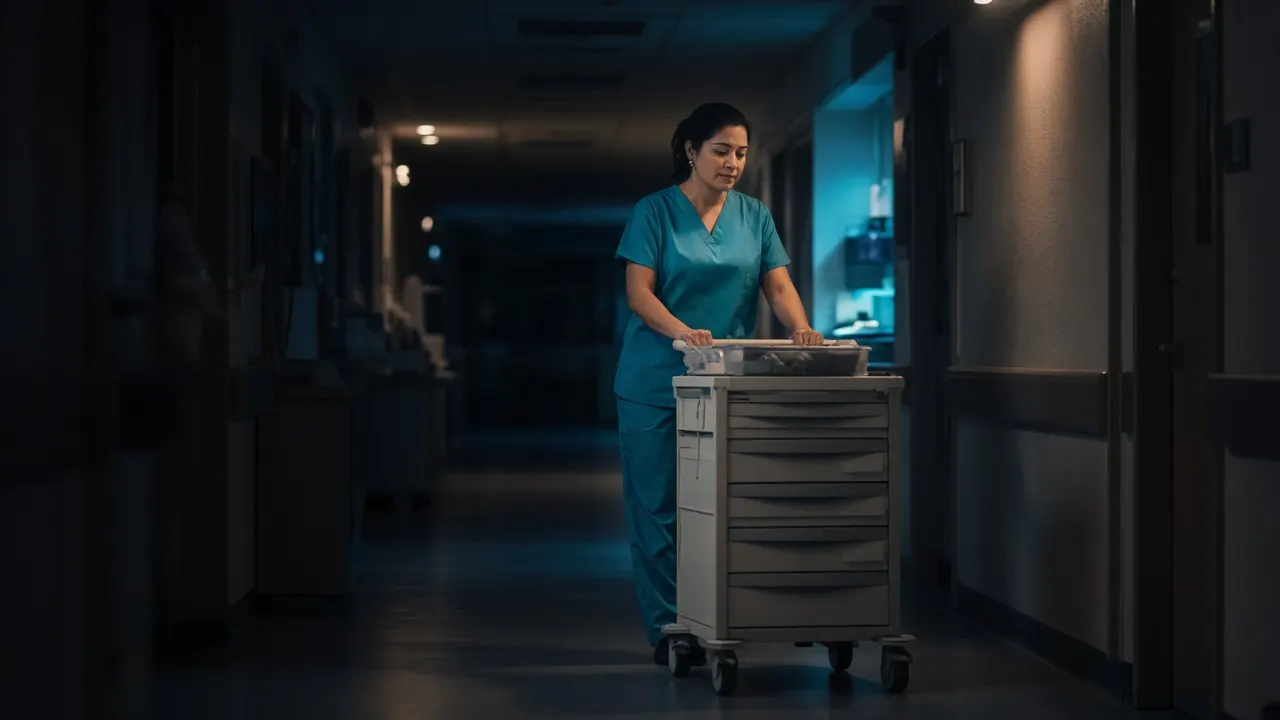

A strong adult-health score cannot hide a weak coordinated-care line. Faculty and employers look at the sitting in front of you. Nursier keeps each topic honest, then mixes them when you have a day off.
Build custom sets for adult health, geriatrics, pharmacology, wounds, or coordinated care. The real sitting asks “what do you do now.” Practice that way so you know which leak to repair first.
After a set, you see which topic leaked and which stems keep returning. That is the study plan. Do not restudy everything. Restudy the two lines that pulled the total down, then mix.
Every miss gets a plain-English reason: the hold parameter, the first action for crackles, the isolation PPE, or the report line. You also see why the other choices fail. That is how a red X becomes a habit you can keep on nights.
Practice and revision by topic
Walk into the lab having practiced adult health, geriatrics, and coordinated care the way faculty assign them. Sets stay short. Timed sets come after you can explain the first action out loud.

Diabetes, heart failure, COPD, and wounds. If you miss adult-health items, you are often choosing teaching when the client is unsafe.
Falls, skin, confusion, and the first action when a resident changes. Long-term care is not trivia on ATI LPN. It is the job.

Know what you may do alone. Know when to call the RN. Assignment and report lines still move the score.
Your school or employer assigns the ATI LPN sitting. You do not buy a consumer walk-in the way some students buy TEAS. Ask faculty for the date, the lab rules, and how scores move in the course. Nursier does not sell the exam and is not ATI.
A comprehensive guide
Preparing for a practical nursing assessment can feel exciting and heavy at the same time. The sitting is a gate for many PN programs and some workplace reviews. Master the topics, the question types, and a plan you can finish after nights. Then sit the clock.
Adult health asks whether you protect the client before you comfort the client. You will see insulin peaks, hold parameters, crackles, weight gain, and shortness of breath. Priority items ask what you do first. Teaching items wait until the client is safe.
ATI LPN adult health turns on hold parameters and the first safe action. Sweaty and shaky is glucose now, not a later teaching plan. Know when to notify the RN. You do not need a full provider differential. You need the next step that keeps the client safe until help arrives.
Geriatrics is basic on paper and strict on the floor. Falls, pressure injuries, dehydration, and a sudden change in confusion show up again and again. A new fever in a resident is not a later problem. Sit the client up, check vitals, and report.
Word problems are still the exam. “A resident has a three-pound gain overnight” is a fluid item. Practice by naming the first action out loud. Then time a short set so you learn when to skip and return.
Programs in Texas, Florida, California, and Ohio often watch the geriatrics line even when adult health looks fine. Rebuild falls and skin in week 1. Do not wait until Thursday of exam week.

Meds cover hold parameters, peaks, teaching, and the first step after an error. You do not need a hospital formulary. You need the drugs you actually pass: insulin, diuretics, anticoagulants, inhalers, and pain medicine. Fifteen focused items a day beats a Sunday binge after a 12-hour shift.
Students who binge pharmacology videos on a day off and skip naming the hold parameter out loud usually land in the same score band on a retake. Write three meds you gave today and one teaching point each. That tiny notebook beats a new course you will not finish.
Coordinated care is shorter than adult health, and students treat it as optional. That is a mistake. Scope, assignment, isolation, and when to notify the RN still move the score. If two answers look kind, pick the one that keeps the unstable client with the RN.
A predictor-style mix is a snapshot. It is not a prophecy of NCLEX-PN. A number without a leak list is not a plan. Write the two topics you missed. Live there. Then sit NCLEX-PN items when licensure is next, not while the ATI LPN exam is still on the calendar.
Pick the tools that match how much time you have, not a pile of extra products.
Exam-style items for adult health, geriatrics, pharmacology, wounds, and coordinated care. Build a custom set around one topic, or mix when you are ready for a readiness check.
Start ATI LPN practice →Short practice sets for insulin, fluid, isolation, and assignment. Read the explanation, then do another small set the same night. That is how memory lasts through exam week.
Start a review set →Sit a topic with the clock on a day off. Eat. Use the restroom first. Untimed brilliance after nights is not the lab you will walk into. Use mixed timing in week 2, not on day one.
Time a topic →
Nursier does not register you for an ATI LPN exam. Your program or employer does. Faculty pick the date, the lab or remote rules, and how the score counts. Students usually open the ATI student portal with a school code, not a consumer walk-in page.
Ask your instructor for the current blueprint, identification rules, and remediation policy. Those details change by cohort. Nursier is practice, not the registration desk. We are independent. We are not affiliated with, endorsed by, or sponsored by ATI.
ATI publishes blueprints for students inside the school portal. Counts below are the usual picture PN students study against. Always confirm the outline faculty gave you before lab day. Some items may be unscored. You will not know which ones, so treat every item as real.
| Topic | What students practice | Usual timing picture |
|---|---|---|
| Adult health | Diabetes, cardiac, respiratory, wounds | A timed content exam assigned by the course |
| Geriatrics | Falls, skin, confusion, hydration | Often mixed with adult health on the same sitting |
| Pharmacology | Hold parameters, peaks, teaching, errors | Short sets that still move the total |
| Coordinated care | Scope, assignment, isolation, report | Near the end of a level or near a workplace review |
Schools and employers set their own cut scores. Many look at adult health and coordinated care together. Practice until readiness sets sit above the line faculty named, not on it. A predictor-style mix is a snapshot, not a prophecy of NCLEX-PN.
Week 1 is the two leaking topics. Week 2 is mixed timing on a day off. Students in Tampa, Phoenix, Fresno, and Newark often try to “just cram after a 12-hour shift.” A three-hour binge does not stick.
Ten mixed questions. Circle the two topics you missed. Those two topics own this week. Do not study everything.
Adult health first if it leaked. Geriatrics or meds next. Fifteen minutes after report, not one Sunday binge.
Tutor mode on work nights. Timed mode on a day off. Eat. Use the restroom first. Skip and return.
In week 2, take a mixed set. Review every miss the same night. Sleep. Then sit the school exam with a plan you already practiced.
Some programs use one vendor. Some switch by course. Study the brand on the calendar this month. If you truly must sit both, finish the ATI LPN map in front of you, then move HESI LPN work onto the same leak list. LPN and LVN prep keeps both school banks on one path.
| ATI LPN | HESI LPN | |
|---|---|---|
| Who assigns it | Many PN programs and some employers | Many programs, often with an exit-style mix |
| Shape | Content exams and workplace-style assessments | Specialty or exit-style mixed adult health |
| Hardest leak for most students | Coordinated care and hold parameters | The same floor topics, plus mixed exit timing |
| Register through | Faculty and the ATI student portal | Faculty and the Elsevier Evolve path |
| Start here | Start a short diagnostic | Study HESI LPN |
Local units change the patients you see. They do not change the safety standard. Nursier is written in American English for LPNs and LVNs who will sit ATI LPN exams in every U.S. state and territory.
Tampa, Houston, Dallas, Atlanta, Phoenix, and Las Vegas. Nurses here study on nights and weekends, not in a fake full-time classroom.
Newark, Philadelphia, Boston, Buffalo, and Baltimore. Short phone sets fit the commute. Review misses after report.
Columbus, Chicago, Detroit, Indianapolis, and St. Louis. Long-term care, rehab, and med-surg all sit the same national-style items.
Fresno, Los Angeles, Portland, Seattle, and Denver. Pages stay light so study works on a phone after a 12-hour shift. Timed practice is part of the work.
Vocational nurses in California and practical nurses in every other state can use the same map. The English is the exam English. Learn the words on the page, then time the sitting.
These notes show the kind of support Nursier is built to give. Your score still depends on your plan, your practice, and your rest. We do not publish fake pass rates.
 Aisha, PN studentTampa, Florida
“Adult health looked fine until coordinated care pulled the total down. Ten-item sets after clinical beat another random mixed bank.”
 Marcus, working LPNColumbus, Ohio
“I stopped highlighting the whole chapter. I timed insulin twice a week and named the first action out loud. The retake felt like a different exam.”
 Lia, night-shift LVNFresno, California
“Ten questions after nights is realistic. Hold parameters were the items I kept skipping. They still count.”
How to prepare
Most students do not miss an ATI LPN exam because they are not smart. They miss it because they study in a way that feels busy and still leaves holes. They highlight a whole chapter. They watch six hours of video after a 12-hour shift. Then they sit the lab and freeze on an insulin item. Nursier is built around a slower method: diagnose, learn, practice, and remediate.
Search results will offer you more LPN books than you can carry. That is not a plan. Pick the exam on the calendar. Finish a diagnostic. Make a list of five weak topics. Study those until you can explain them to a classmate in plain English. Then add mixed practice. If your school wants HESI LPN this month, leave this page and open that map. If you are two weeks from NCLEX-PN, do not reopen an old fundamentals binge.
ATI LPN uses a small set of tasks: what do you do first, which finding matters, which teaching statement is wrong, and when to notify the RN. Adult health uses “which action” and “which lab.” Geriatrics uses “which resident do you see first.” Coordinated care uses “which task stays with you.” Nursier explanations name that task so you stop treating every item like a memory quiz.
Proctored exams are timed. If you only practice untimed, lab day will feel like a different sport. Use short timed sets on a day off. Use tutor mode after nights. Eat. Use the restroom. Practice sitting still for twenty minutes. That physical rehearsal is part of exam prep, even though no one puts it on a flashcard.
Insulin, heart failure, isolation, wounds, falls, hold parameters, and coordinated care. These are not the whole curriculum, but they are the leaks that sink content scores. Name the first action out loud. Then do a short set. Ten items a night beats a four-hour weekend.
Retake and remediation rules belong to your school and to ATI’s student tools. Some programs require focused review. Some count the highest score. Read the syllabus. Then change the plan. A second attempt with the same mixed cram usually lands in the same band. Repair the two weakest topics for 14 days, then sit again if faculty allow it.
Your ATI LPN score is a snapshot, not a prophecy of the nurse you will be. It is still a gate. Remediation is not punishment. If a question feels unfair, write down the idea and keep going. The next item may be the one that shows your true level. Nursier is here to make that process calmer and easier to repeat after a real shift.
Buttons, timers, and review flags stay easy to find so you spend energy on the stem, not on the software.
Multiple choice that looks like the floor: an insulin change, a wound, a fall risk, a report line. Distractors teach common mistakes.
Mixed assessments show whether you are guessing or ready. Use them in week 2, after the leaks are named.
Open a ten-question set on a phone after report, on a laptop in the break room, or on a classroom screen.
Practice covers the facts ATI LPN uses every day: safety, insulin, fluid, isolation, and clean assignment. Must-know first, extra detail second.
Some students need a full semester. Others need 14 days. Mark weak areas and keep moving without guessing what to study next.
You usually do not buy a public walk-in seat. Your program or employer assigns the exam. Faculty give you a date and access through the ATI student portal. Nursier does not sell the exam.
Common topics include adult health, geriatrics, pharmacology, wound care, and coordinated care. Your syllabus names the sitting in front of you. Confirm that outline before you mix.
Both. Programs use ATI LPN in school. Working LPNs and LVNs use it for jobs, bridge programs, and a skills refresh.
If licensure is next, open the NCLEX-PN page. If the exam on the calendar is ATI LPN, stay here. Close leaks here so you do not start over later.
No. Different vendors. Same job. Study the brand on the calendar this month. Open the HESI LPN page if that is the exam faculty named.
No. ATI is a trademark of Assessment Technologies Institute. Nursier is independent and not affiliated with, endorsed by, or sponsored by ATI. Start a short diagnostic and review every miss the same day.
Create an account and start with ten questions.
Yes. That is the design. Ten questions and one explanation. A three-hour binge after nights does not stick.
Retake policies vary by school. Read the syllabus. Then change the study plan. Repair the two weakest topics for two weeks before you sit again if faculty allow it.
Yes. Study on phones, tablets, laptops, and classroom screens.
Each page has 15 questions. Five include answers and rationales. LPN exams cardiovascular practice questions, LPN exams community health practice questions, LPN exams endocrine practice questions, LPN exams ethics practice questions, LPN exams fundamentals practice questions.