How to choose an NP program that still works after graduation
The “best” nurse practitioner program is the one that matches the patients you want to treat, gets you to the right national certification, and is a license your board will actually issue in the state where you will practice. Fame is optional. Congruence is not. A Phoenix ICU nurse looking at a family-NP ad and an acute-care ad is not choosing a brand. They are choosing a population for the next decade.
If you do not yet hold an RN license, you are in the wrong article. Start with how to become a nurse in the U.S.. Online lecture still needs clinicals; that method is online nursing programs. Psychiatric lifespan is its own exam: PMHNP. Neonates are NCC: NNP. Nursier does not run an NP program and does not certify NPs.
What “best NP program” actually means
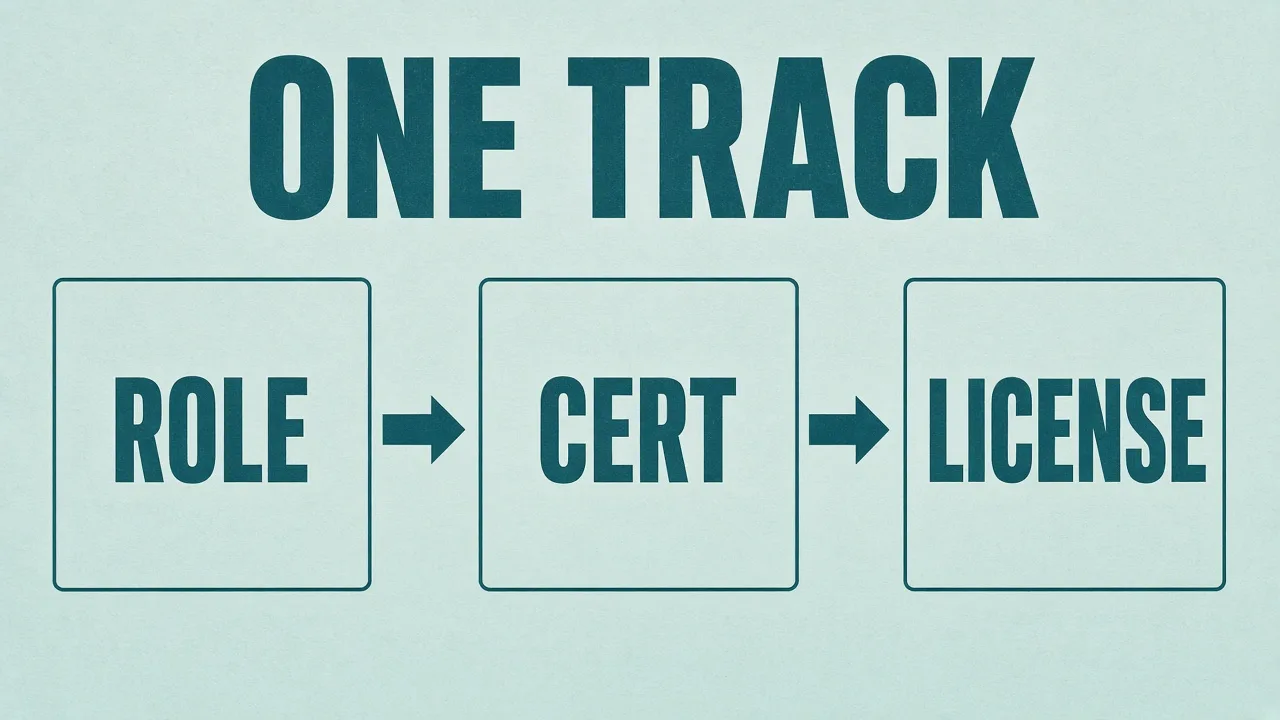
A strong program is accredited, places you for clinicals, prepares the certification that matches the track, and leaves you employable in your state. A national top-ten table mixes research dollars, a brand color, and a paid placement. Use it as a rumor. Then ask: did you finish an accredited graduate track in one APRN role and one population, can you sit a national certification exam in that same pair, and will your board license that pair.
The Consensus Model is blunt. Education, certification, and licensure must be congruent. You may add a specialty later. You may not be licensed solely in a specialty. Emergency, oncology, and palliative certificates enrich practice. They do not invent a new license. Read that in the APRN Consensus Model report (PDF).
You already need an RN
A nurse practitioner is an advanced practice registered nurse in the certified nurse practitioner role. You need an RN license first. BLS groups nurse practitioners with nurse anesthetists and nurse-midwives and still starts from graduate education plus national certification plus state license. Read BLS on nurse anesthetists, nurse-midwives, and nurse practitioners.
If you are still in an ADN or a BSN, this article is a later map. Finish the RN door. Sit NCLEX-RN when faculty put you in that window. Do not study an NP certification exam in fundamentals. That is how people fail the exam they have this week.
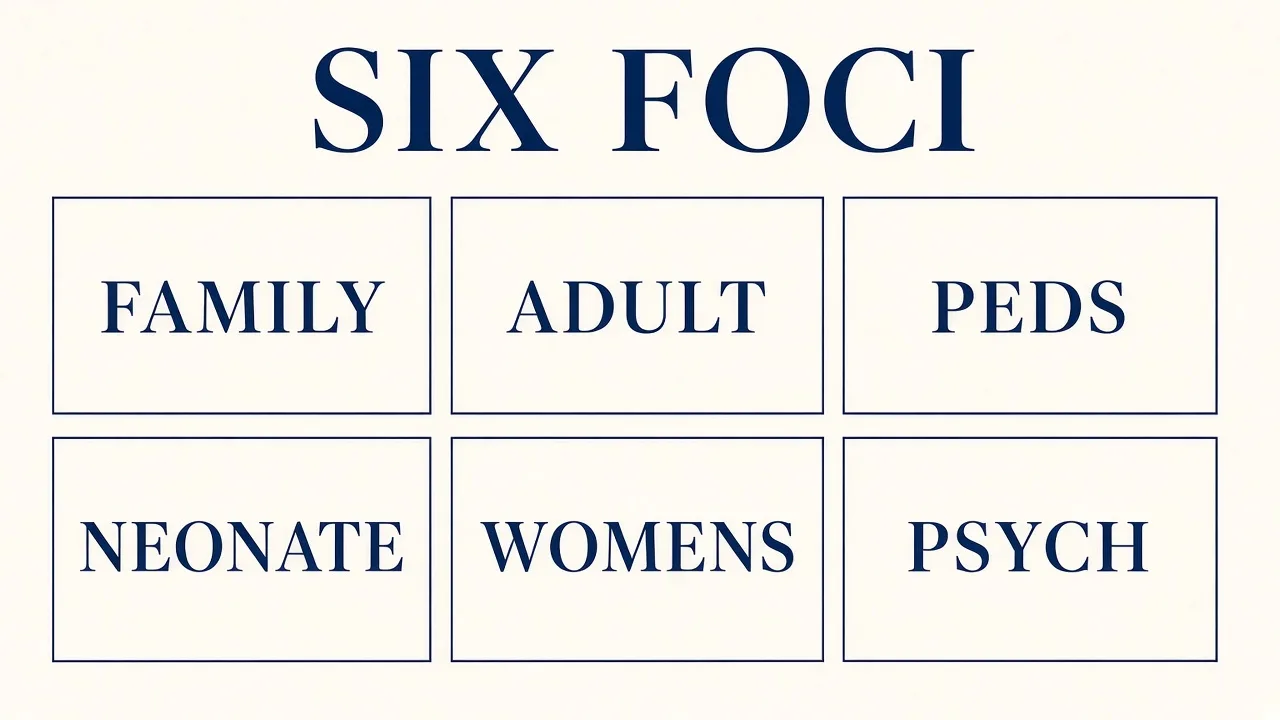
Four roles, six foci
The Consensus Model names four APRN roles: certified registered nurse anesthetist, certified nurse-midwife, clinical nurse specialist, and certified nurse practitioner. This page is about the last one. The other three are real. They are different doors with different certifiers. Do not let one “advanced practice” ad collapse them.
A nurse practitioner is educated in that role and in at least one of six population foci:
- Family / individual across the lifespan
- Adult-gerontology
- Pediatrics
- Neonatal
- Women’s health / gender-related
- Psychiatric / mental health
AACN’s public Consensus Model FAQ repeats the same list and adds a sentence people skip: specialty certification does not convey legal authority to practice. Age parameters are not defined in the Model itself. They live in standards and in your Nurse Practice Act. Start at the AACN Consensus Model FAQ (PDF).
Family, adult, peds, and acute versus primary
Family nurse practitioner is the track most ads sell, because the word “family” photographs well. It is primary care across the lifespan. It is not a license to run an ICU. The Consensus Model says the acute-care versus primary-care split applies to pediatric and adult-gerontology nurse practitioners. An adult-gerontology acute care NP and an adult-gerontology primary care NP are two populations of work. A pediatric acute care NP is not a pediatric primary care NP in a louder font.
If you want the ICU, the step-down, the hospitalist service, read the word acute on the diploma row and on the certifier’s exam title. If you want clinic, read primary. If you want kids from well-child through hospital, you may need more than one credential over a career. You do not get there by hoping a family track “covers it.”
NCSBN keeps a public table of which certifiers offer which exams for which role and population. Use it as a check, not as a shopping cart. Open NCSBN’s approved APRN certification exams (PDF) and match the row to the track in the catalog.
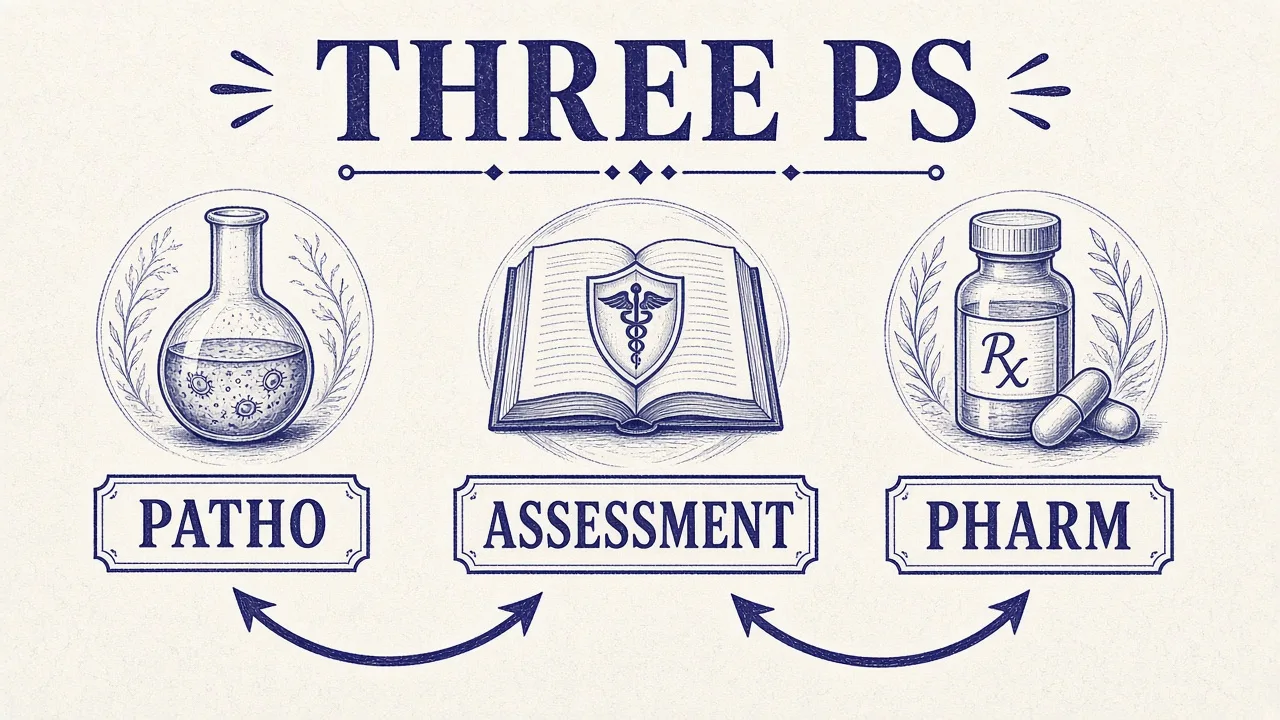
The three P’s every catalog owes you
APRN education, in the Model, includes three separate graduate-level courses in advanced physiology or pathophysiology, health assessment, and pharmacology, plus clinical experiences that match the role and the population. Programs sit inside nationally accredited graduate nursing. Graduates must be eligible for the national certification used for state licensure.
Ask for those three course numbers on email. Ask whether a gap year or a bridge “waives” one of them. A waiver that your board will not accept is not a savings. It is a second year.
CCNE and ACEN still matter at the graduate level. Confirm the exact degree row in the directory. An accredited RN-to-BSN at the same university is not proof that this DNP-NP track is the row you think it is. The method is in the accreditation article. Use it.
MSN, DNP, and the 2025 argument
NONPF committed, in 2018, to move entry-level NP education to the Doctor of Nursing Practice by 2025, and restated that in April 2023. That is a faculty organization’s position. It is not a federal ban on the MSN. Many MSN-NP tracks still admit. Many boards still license those graduates when the role, the population, and the certification line up. Read NONPF’s own words in Reaffirming the DNP Degree (PDF).
Do not pick DNP because a forum said MSN is “over.” Do not pick MSN because a recruiter said DNP is “just papers.” Ask whether this exact track makes you eligible for the certification exam you need, in the state where you will apply. The degree letters are a later argument. Eligibility is the first one.
Clinicals, and the 750-hour move
The 2022 National Task Force Standards for Quality NP Education, which NONPF cites, added a criterion that programs incrementally move to 750 direct patient-care hours. That is a standards move, not a promise that every catalog already prints 750. Ask the program for the direct-care number, the simulation cap, and who finds the preceptor.
Online NP ads fail in the same place prelicensure ads fail: “we partner nationwide.” Ask who books the site in your county. Ask what happens if the first preceptor says no. Ask whether your home unit can count. A yes on the phone that becomes a no in week six is how people lose a semester and a tuition charge.
If the track is hybrid, the week still has intensives. Time zones, proctors, and weekend labs is that problem in prelicensure language. The NP version is a hotel near a skills intensive and a preceptor who only works Tuesdays.
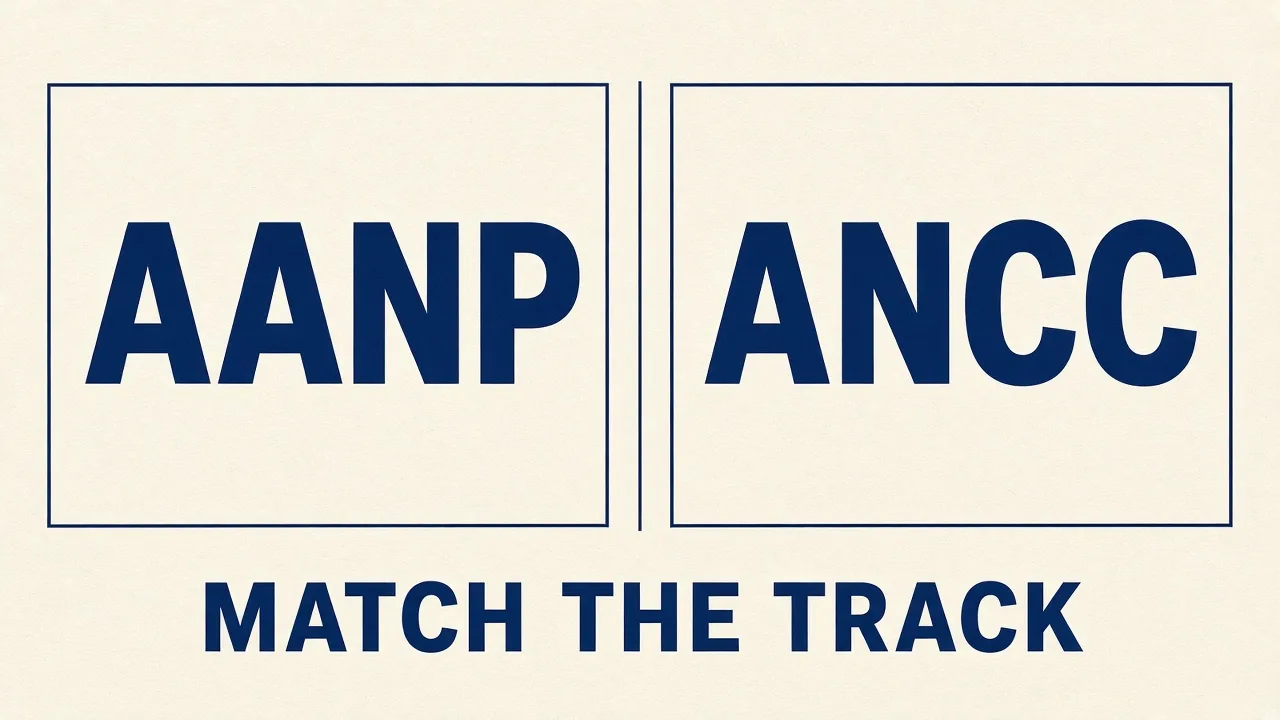
AANP, ANCC, and the exam that matches the track
For many NP populations, the American Academy of Nurse Practitioners Certification Board and the American Nurses Credentialing Center both offer exams. Pediatric tracks often run through the Pediatric Nursing Certification Board. Women’s health and neonatal often run through NCC. Acute-care adult-gerontology also appears at AACN Certification. NCSBN’s table is the public crosswalk. Your board’s list is the law.
Do not pick a certifier because a classmate liked the practice app. Pick the exam your board names for that population. Then confirm the program’s graduates are eligible for that exam. A family transcript will not sit a neonatal exam. An adult-gerontology primary care transcript will not sit an acute-care exam because you “saw some ICU.”
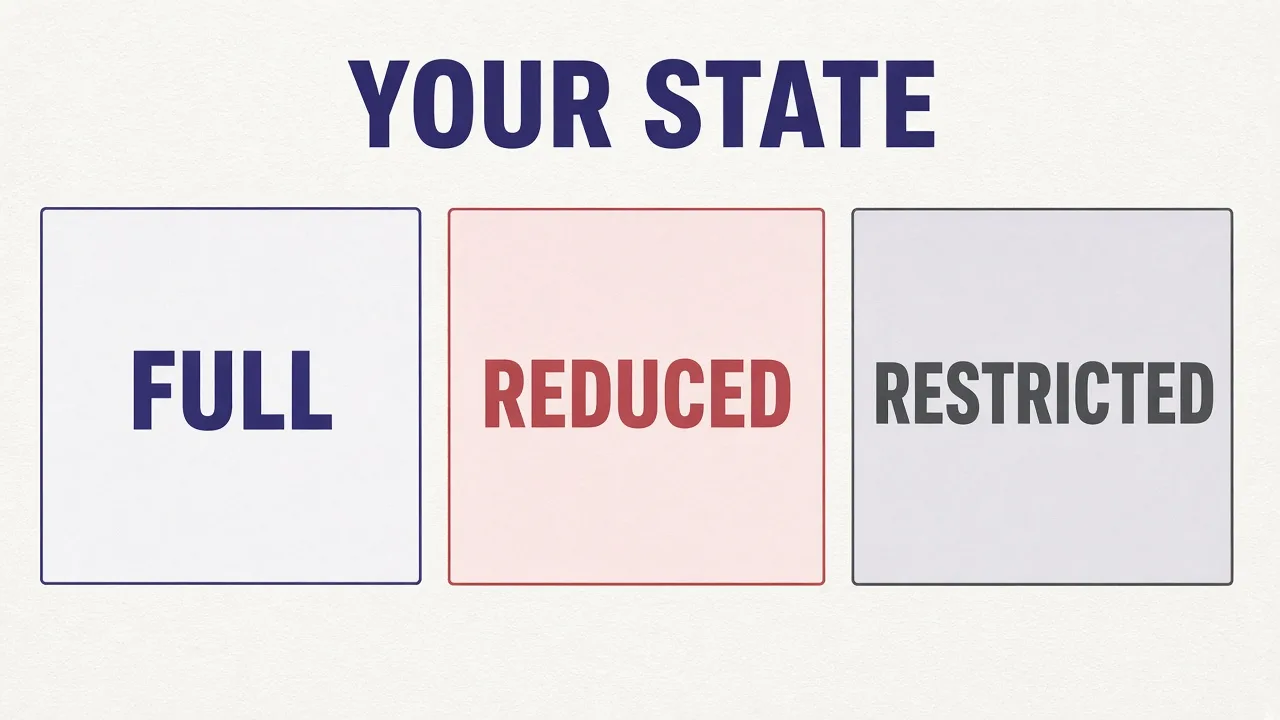
Your board, then the practice map
National certification is not a state license. You apply to the board where you will practice. That board reads the Consensus Model through its own Nurse Practice Act. Some states are closer to independent practice. Some still want a career-long agreement. Some want supervision. AANP publishes the definitions and a live environment page. Full practice means evaluating, diagnosing, ordering and interpreting tests, and managing treatment, including prescribing, under the board of nursing. Reduced means at least one element is limited or a career-long collaborative agreement is required. Restricted means career-long supervision, delegation, or team management by another provider. Read AANP’s state practice environment and the current environment PDF, then open your own board. We will not count states here. Counts move.
If you might move, ask both boards before you pay a deposit. A compact RN license does not automatically become a compact NP license. APRN compact work is a separate, unfinished story. Do not treat a Facebook map as a privilege.
The choosing questions that are not prestige
Call when you are not tired. Ask for email.
- What is the exact role and population on the transcript, and which certification exam does that make me eligible to sit?
- Is that exam on my board’s accepted list?
- Where are the three P’s in the course list?
- How many direct patient-care hours, and who finds the preceptor in my ZIP code?
- How many campus days, and are those dates published a year ahead?
- What is last year’s first-time certification pass rate for this exact track?
- If I move in month eight, what breaks?
If the person on the phone cannot answer items 1, 2, and 4, ask for the program director. Marketing can praise flexibility. The director owns the certifier.
After you pick the track
Write the population on a card. Write the certifier. Write the board. Then stop collecting “best NP” tabs. Collecting tabs feels like progress. It is not a clinical hour.
If you still owe an RN license, study that exam. If you are inside an NP program, keep the certification exam for the end. Unofficial RN practice is for the license you already hold or still need, not a substitute for an AANP item bank. Sit practice questions when the work in front of you is actually a question set. The Nursier editorial team wrote this.
We do not take program deposits. We do not take certification fees. We do not take board fees. Your school, your certifier, and your board keep those payments.
Common questions
Can I become an NP fully online?
You can move a large share of lecture online. You still need graduate clinical hours with real patients and a faculty plan. If a page says otherwise, ask the board, not the ad.
Is FNP the safest choice?
It is the most advertised choice. It is safe only if you want primary care across the lifespan. It is a mismatch if you want the ICU or only neonates.
Do I need a DNP to sit for certification?
Many certifiers still accept MSN graduates from eligible programs. NONPF wants DNP as entry. Your board and the certifier’s eligibility page win. Read both.
AANP or ANCC?
The one your board accepts for that population, and the one your transcript makes you eligible to sit. They are not a personality quiz.
I am an LPN. Can I apply to NP school?
Not as an LPN. You need the RN license and graduate eligibility. Keep PN exams and RN exams apart. If ATI LPN or HESI LPN is the test in front of you now, study that one.
Will an online NP degree hurt me on a job?
Hiring managers read the certification, the population, and whether you can explain where you did clinicals. They do not grade your Zoom background. They do notice if you cannot name a preceptor.
Sources
Confirm live pages. Maps and exam lists move.
- APRN Consensus Model report (PDF)
- AACN, APRN Consensus Model FAQs (PDF)
- NCSBN, approved APRN certification exams (PDF)
- AANP, state practice environment
- AANP, state practice environment PDF
- NONPF, reaffirming the DNP (PDF)
- BLS, nurse anesthetists, nurse-midwives, and nurse practitioners
- CCNE accredited programs directory
Nursier is independent. We are not affiliated with, endorsed by, or sponsored by NCSBN, AANP, AANPCB, ANCC, NONPF, AACN, BLS, or any state board. This article is planning copy. It is not an application, and it is not a ranked list of schools.