What trauma-informed care looks like when the gown will not close
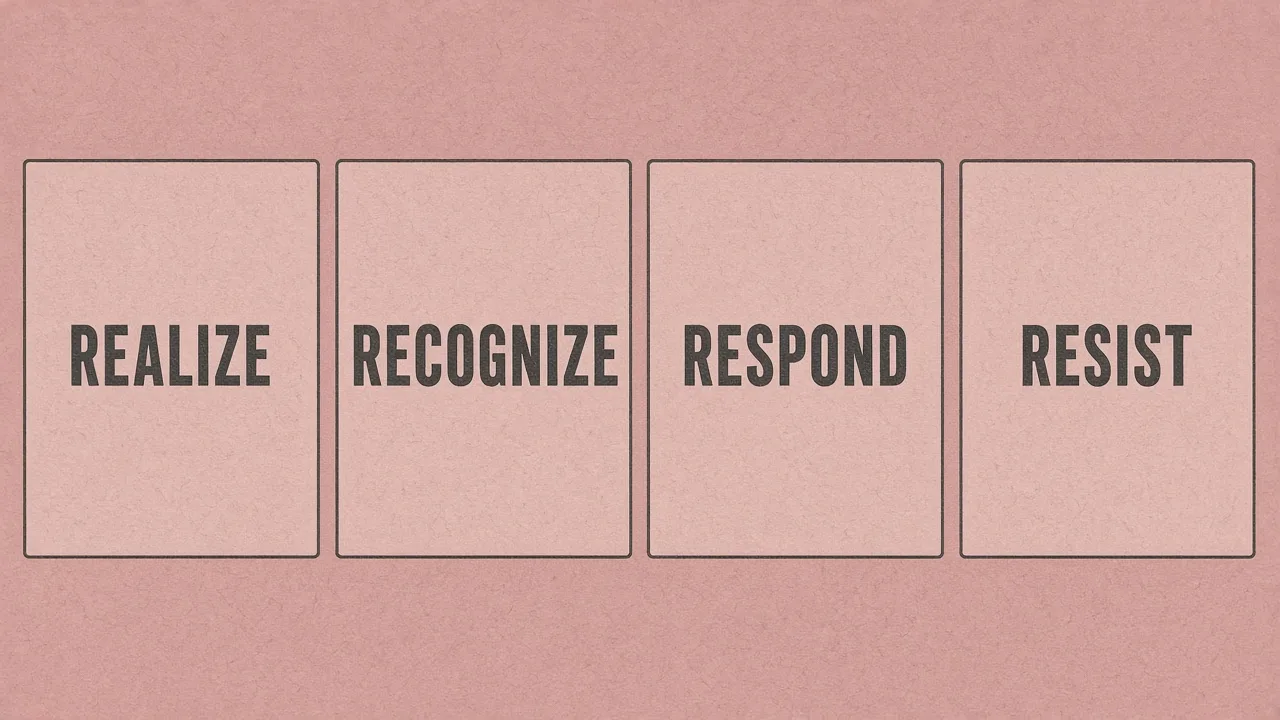
Trauma-informed care is a system claim, not a personality. SAMHSA’s public framework says a program realizes trauma is common, recognizes signs in clients and staff, responds in policy and practice, and works to resist re-traumatization. A pastel heart in an Albuquerque hallway that says “be trauma-informed” while a person is asked to recount an assault twice, in an open gown, is the opposite of that framework.
This guide is how students and nurses use the four R’s and six principles on a real unit. It is not trauma-specific treatment. That is a different clinical job. OCD as a named disorder is obsessions are not a personality. Ethics versus the Practice Act is the Code. Nursier does not run a trauma program.
What trauma-informed care actually is
Search results love the phrase “understanding trauma-informed care” and then sell eye contact. SAMHSA’s concept paper is older and harder. A trauma-informed program, organization, or system realizes the widespread impact of trauma and paths for recovery; recognizes signs in clients, families, and staff; responds by putting that knowledge into policies, procedures, and practices; and seeks to resist re-traumatization. That is an organizational claim. It is not a personality. Read SAMHSA’s concept of trauma and guidance (PDF) and the trauma-informed approaches page.
If the next exam is still NCLEX, sit safety and psychosocial items from the test plan. A pastel heart will not teach the exam. If you want the psychiatric NP door, that is a later license. Keep it on the lifespan exam and your board.
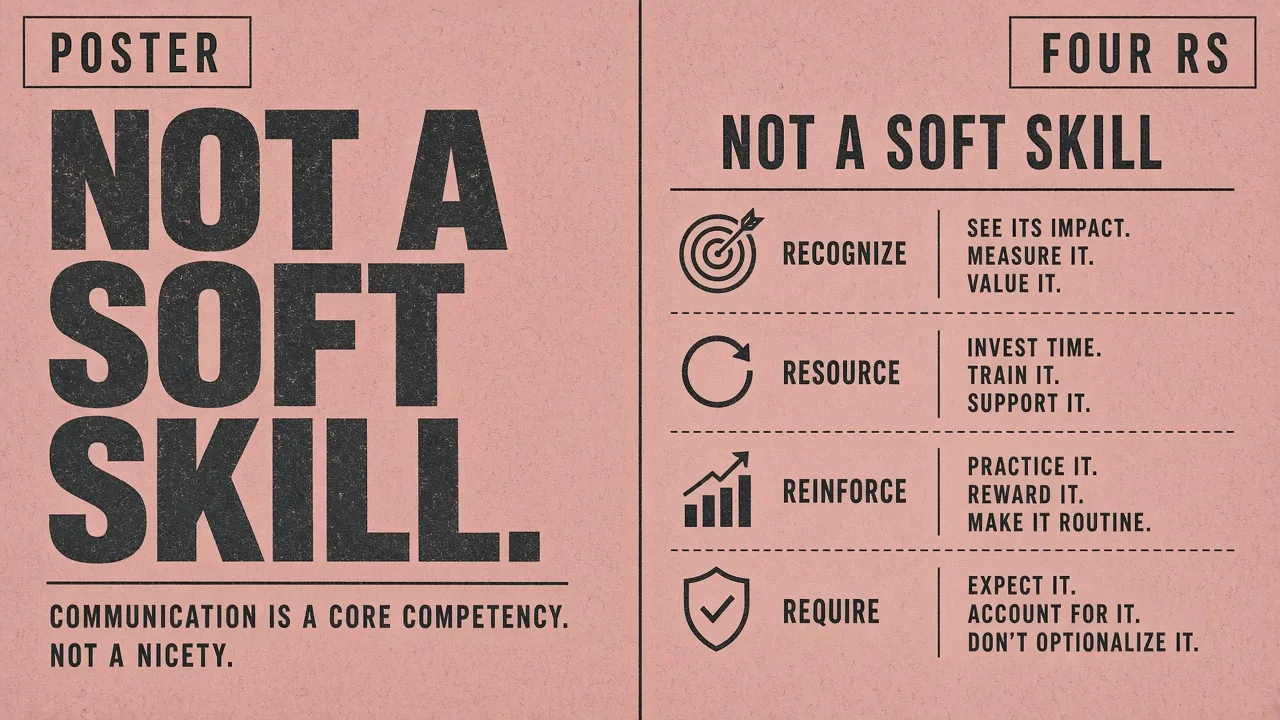
The four R’s are assumptions, not a poster
- Realize. Trauma is common. It shapes families, staff, and whole systems, not only “psych patients.” Coping can look like anger, silence, missed appointments, or a person who will not undress.
- Recognize. Signs are age-, gender-, and setting-specific. Screening and supervision are how a system recognizes. A student’s curiosity is not a screen.
- Respond. Language, budget, training, and policy change. The person who greets at the door is in the framework. So is the board that writes the restraint policy.
- Resist re-traumatization. The work is to avoid doing the harm again: repeating the story for no reason, forcing a crowd, using the body as a teaching aid, leaving a door open on purpose.
Six principles, one hallway
SAMHSA’s six principles are safety; trustworthiness and transparency; peer support; collaboration and mutuality; empowerment, voice, and choice; and cultural, historical, and gender issues. They are not a checklist you recite over a cart. They are how you judge the hallway.
Safety is physical and psychological. A gown that will not close is not safety because a sign said “we care.” Trustworthiness is telling the person who will walk in next and why. Voice and choice is asking before you pull the sheet down for a student audience. Cultural and historical issues are why a uniform and a locked door do not land the same for every body in Bernalillo County. We will not invent a script that works for every room. Ask the person in front of you. Ask the unit’s actual policy. The Code is not the Practice Act, and neither is a heart sticker.
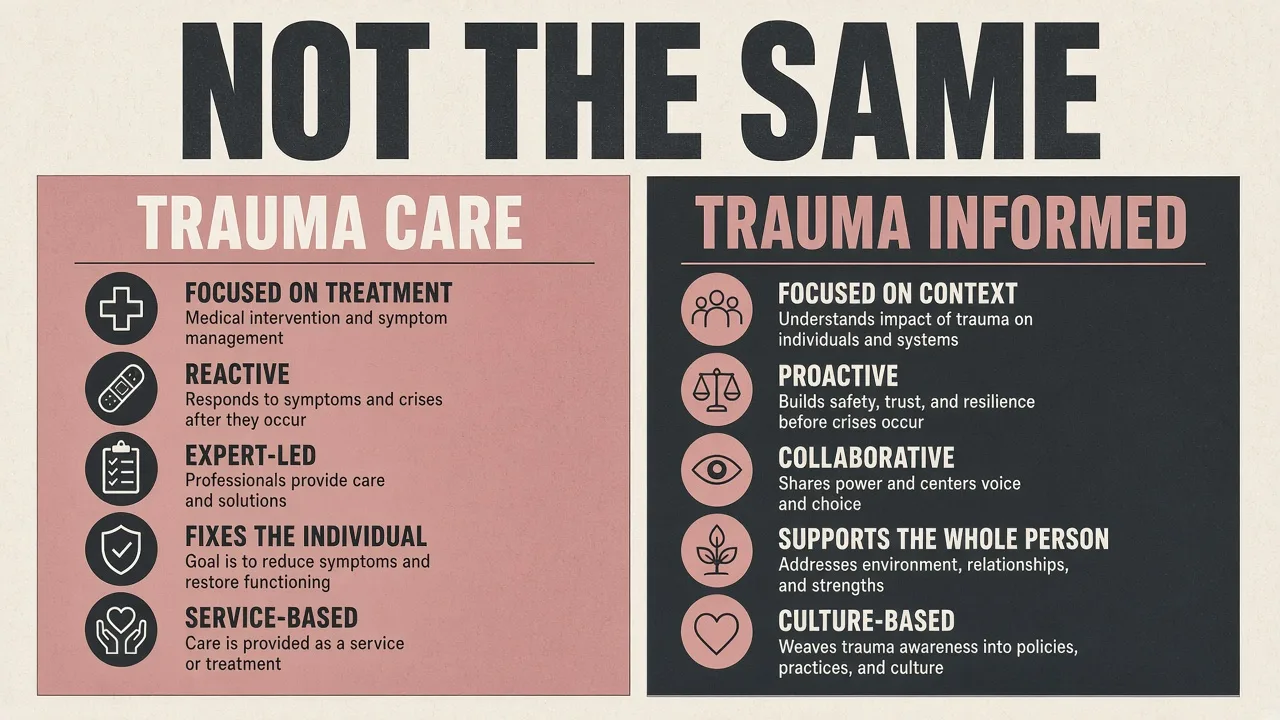
Trauma-informed is not trauma treatment
SAMHSA draws the line. A trauma-informed approach is the culture. Trauma-specific services are the treatments: assessment, therapy, recovery supports. You can work on a medical-surgical floor that is trauma-informed and never deliver prolonged-exposure therapy. You can work in behavioral health and still re-traumatize someone with a poorly run intake. Do not call yourself a trauma therapist because you took a one-hour module. Do not skip the module because you are “not psych.”
What a nurse can change tonight
- Ask who already took the history before you take it again.
- Close the door, or name why you cannot, and offer a second sheet.
- Tell the person who is coming in and what they will touch.
- Keep the student crowd to the number the person agreed to.
- Use the interpreter the policy named. A family member is not a default.
- After a hard room, use the building’s debrief path. Secondary traumatic stress is in SAMHSA’s realize paragraph. It is not a weakness you hide in the supply room.
If the policy is the problem, that is respond. Write it. Take it to the person whose job is policy. A sigh in the hallway is not a response.
What not to perform this month
If the next exam is NCLEX, sit NCLEX. A trauma module will not replace the test plan. If you are still a student, you do not get a second history because you “need the experience.” If you already hold the license, name one R you will practice on this shift and one policy you will read. Official language stays with SAMHSA. Unofficial practice will not replace a closed door. Sit practice questions in the exam in front of you. The Nursier editorial team wrote this.
After you name the R
Write four facts: which R is missing on this unit, which principle the hallway fails, what you will do on this shift, and which policy you will open. Then close the pastel tab. A complete-list of trauma definitions is not a closed door.
We do not take SAMHSA publication fees. We do not take hospital training fees. Those offices keep those payments. We do not treat trauma.
Common questions
Is trauma-informed care only for psych units?
No. SAMHSA says trauma shows up in primary care, child welfare, justice, and the rest of the building. An ED hallway counts.
Do I have to ask every patient for their trauma story?
No. Recognize does not mean extract. Repeating a story for a student is often the opposite of resist.
Is this the same as PTSD treatment?
No. Treatment is trauma-specific. Trauma-informed is how the system behaves around anyone, including staff.
What if the policy is the thing that re-traumatizes?
That is a respond problem. Write it. Take it to the person who owns the policy. A poster cannot fix a rule.
Sources
Confirm live SAMHSA pages. Framework language is public and still the standard people cite.
- SAMHSA, concept of trauma and guidance for a trauma-informed approach (PDF)
- SAMHSA, trauma-informed approaches and programs
- SAMHSA, six guiding principles infographic
Nursier is independent. We are not affiliated with, endorsed by, or sponsored by SAMHSA or any hospital. This article is planning copy. It is not trauma treatment, not a diagnosis, and not a hospital policy.