Understanding OCD symptoms without calling it a personality
Obsessive-compulsive disorder is a named mental-health condition. NIMH describes repeated, unwanted thoughts and the urges or acts people use to quiet those thoughts. It is not “being particular.” It is not a compliment for a color-coded closet. A person in a Providence med-surg room can spend more than an hour at a sink, crack the skin on both hands, and still hear a student whisper “she’s just OCD.” That whisper is the symptom people get wrong. The cracked hands and the delayed morning medication are the ones the nurse actually has to manage.
This guide uses NIMH’s public language so students and bedside nurses can name obsessions, name compulsions, and know what belongs to a licensed mental-health clinician. Nursier does not diagnose OCD and does not deliver exposure-and-response-prevention. If trauma-informed care is the building’s job, that is the four R’s. If the later career is psychiatric NP, that is the lifespan exam.
What OCD is, in public language
Read NIMH’s OCD topic page and the brochure when unwanted thoughts or repetitive behaviors take over. Those pages are the source. A nursing site that pretends to be a psychologist is an ethics problem. Keep the Code on not the Practice Act.
People may have obsessions, compulsions, or both. Symptoms often start between late childhood and young adulthood. Stress can worsen them. Themes can change. Some people also have tics. Mood and anxiety disorders commonly sit next to OCD. Children may not see the ritual as odd. Adults often do, and still cannot stop.
Obsessions, compulsions, and common themes
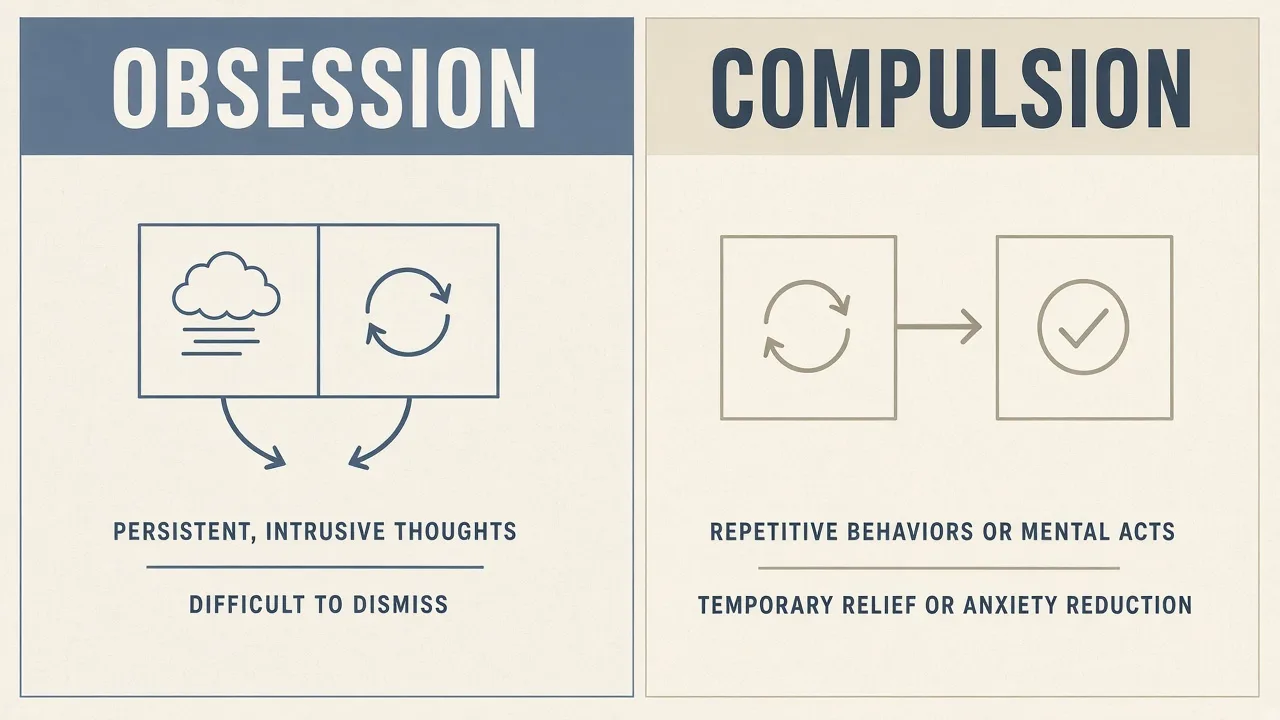
Obsessions are repeated thoughts, urges, or mental images that are intrusive, unwanted, and make most people anxious. Public examples NIMH names include contamination, losing something, losing control, aggressive or taboo thoughts, and symmetry.
Compulsions are repetitive behaviors a person feels pulled to do, often in answer to an obsession: washing, ordering, checking, counting, silent repeating. The act does not give pleasure. It buys a little quiet. Then the thought comes back.
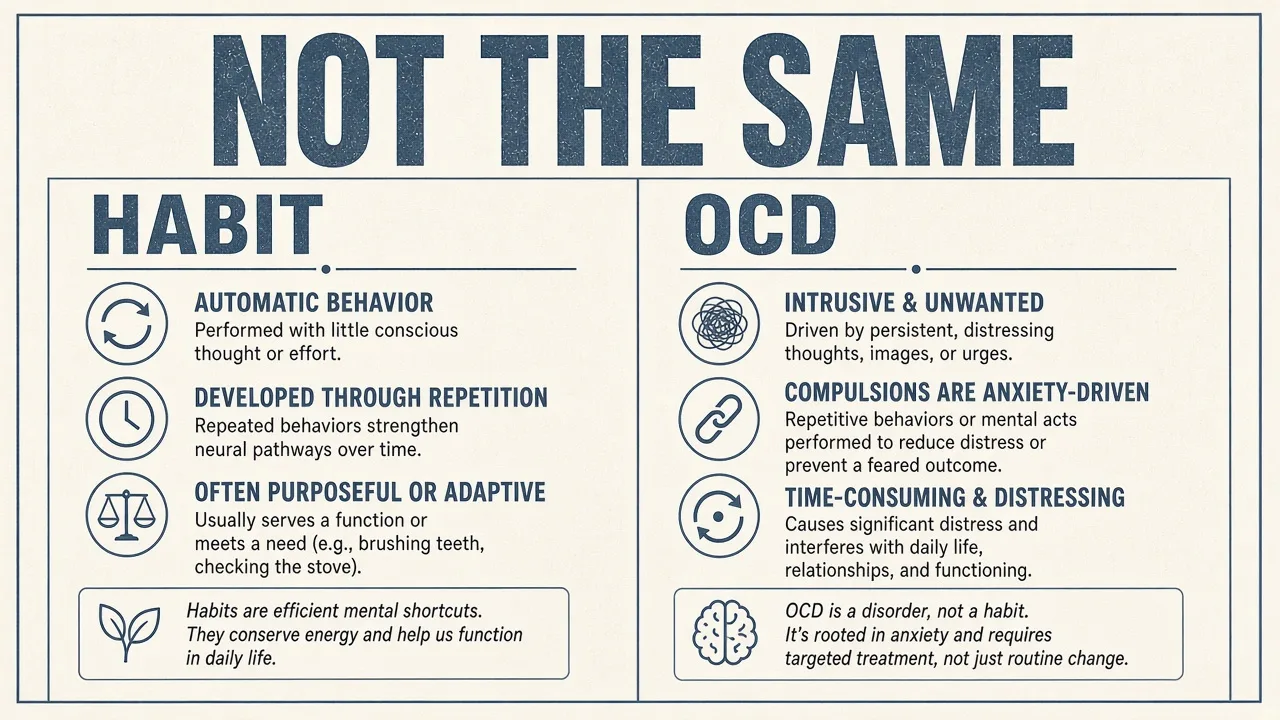
How to tell a habit from a disorder
NIMH’s “generally” list is the filter students should keep:
- The person cannot control it even when they know it is excessive.
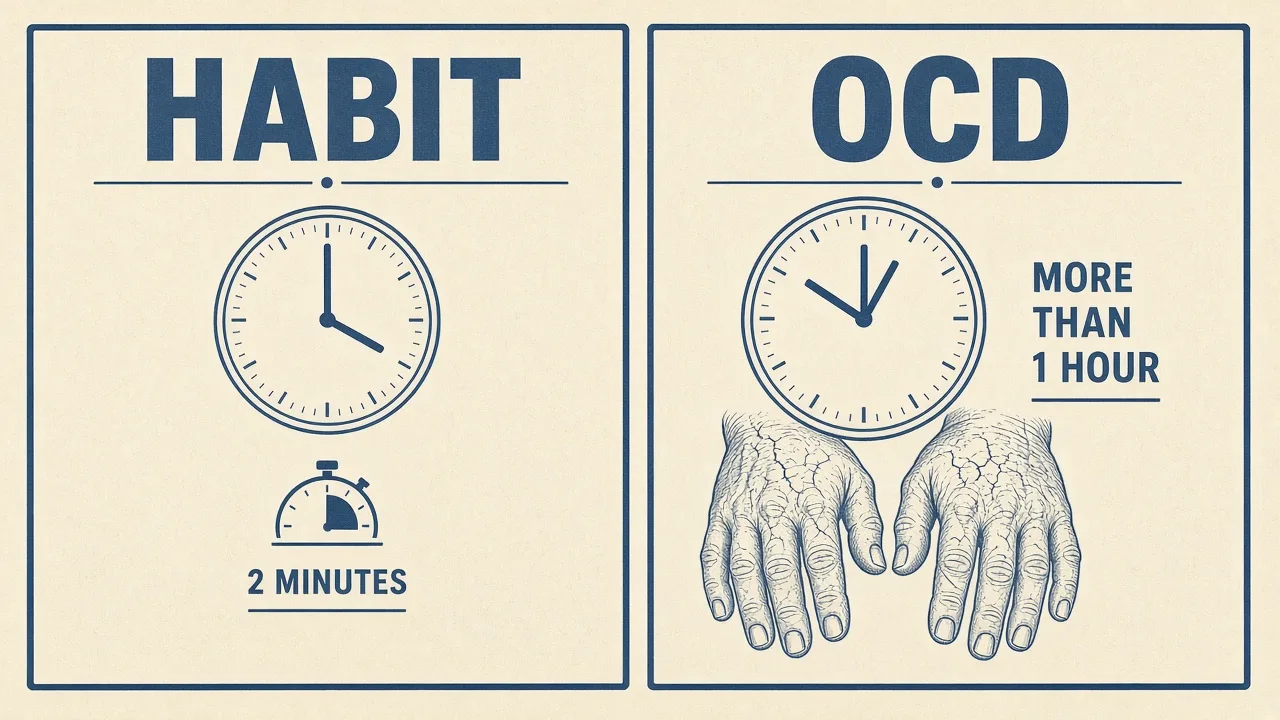
- It takes more than an hour a day.
- The compulsion does not give pleasure, only temporary relief.
- Daily life is significantly worse because of it.
A two-minute double-check of a lock is a habit. An hour at the sink that makes a 7:15 medication pass fail is a different sentence. Neat is not a diagnosis.
What nurses see, and what they can do
- A wash that will not end, and skin that is a wound.
- A need to count pills in a pattern that is not the MAR.
- A refusal of a roommate because symmetry broke.
- A delayed procedure because a locker must be checked again.
- Alcohol or avoidance used as a coping story in the social history.
Protect skin. Protect time. Ask what usually helps the person finish a necessary care task, and write that in the plan. Tell the provider the minutes you observed, not a label you invented. Do not stop a compulsion as a joke or a teaching moment. That is how people decompensate in a hallway. Do not say “we’re all a little OCD.” Do not hide the soap.
Treatment, without inventing a drug
NIMH points people to a health-care provider, then often to a mental-health professional. Psychotherapy and medication are on that public page. We will not invent a first-line drug or a session count. If the person already has a PMHNP or a psychiatrist, use that team. Exposure-and-response-prevention belongs to a clinician who is treating them, not to a student who needed a paper title.
How this shows up on nursing exams
Psychosocial integrity is a Client Needs slice on NCLEX. Safety sits next to it. If the next exam is the license exam, sit those items from nine ways that match the test plan. Official language stays with NIMH. Unofficial practice is a separate product. Browse practice questions. The Nursier editorial team wrote this.
Common questions
What are the main symptoms of OCD?
Unwanted, repeated thoughts or images, and the rituals people use to quiet them, or one of those without the other. Time, distress, and interference with life are how NIMH separates this from a habit.
Is wanting a clean room OCD?
Usually no. Neat is not a diagnosis.
Should I stop the washing so they can see nothing bad happens?
Not as a bedside experiment. Exposure work belongs to the treating clinician.
Can a nurse diagnose OCD?
A diagnosis is a licensed clinician’s act in your state. Observe, document, refer.
Is this the same as being trauma-informed?
No. Trauma-informed is how the building behaves. OCD is a named disorder. They can sit in the same room.
Sources
Nursier is independent. We are not affiliated with NIMH or any clinic. This article is planning copy. It is not a diagnosis, not psychotherapy, and not a substitute for a licensed clinician.