How the nursing Code of Ethics works at the bedside in 2026
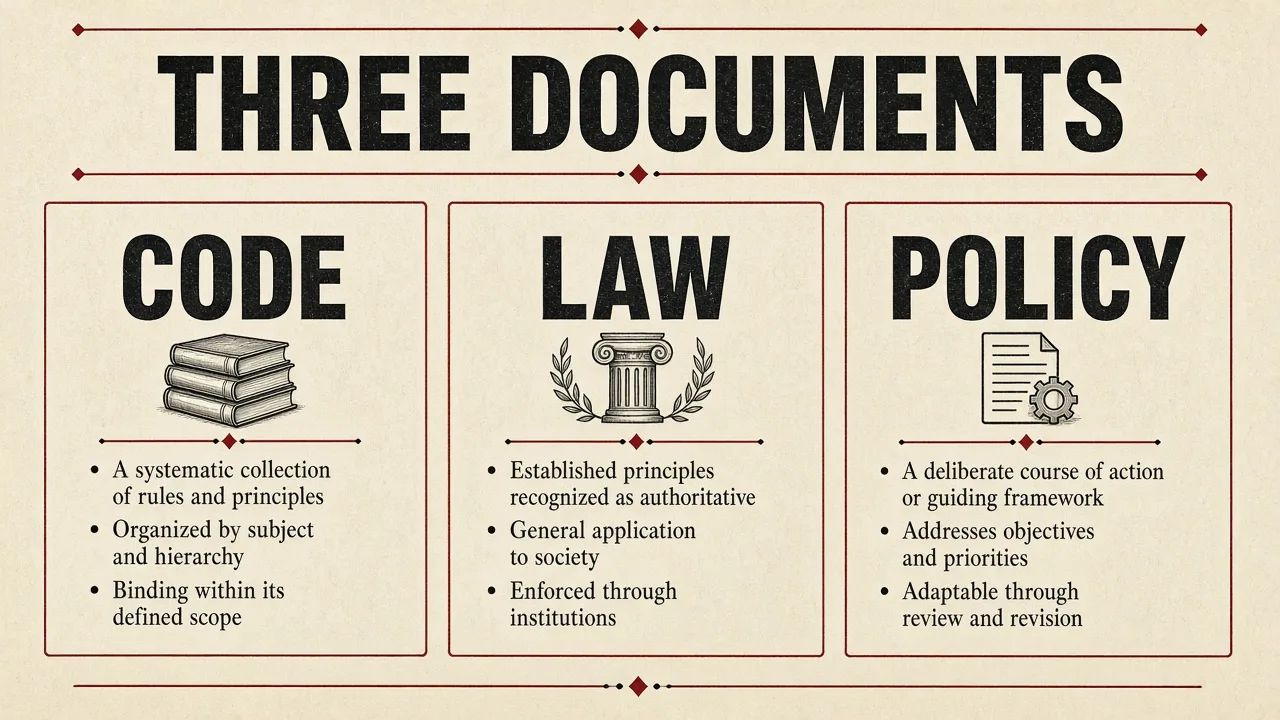
The ANA Code of Ethics is the profession’s moral standard. The Practice Act is the law the board enforces. The policy is the building. A Buffalo locker card from 2019 that still lists nine provisions is a year late — the 2025 Code has ten — and it will not tell you whether a fifth admission still has your name, or whether a disappearing story with a room number is a record. Those three documents are not interchangeable.
This guide is how to use them on a shift: assignment, phone, colleague, walking off. ANA already keeps the live text at the Code home. Quality work that needs a measure lives on the measure, not the poster. Trauma-informed policy lives on the four R’s. Nursier does not write the Code.
How the Code, the Practice Act, and policy work together
Search results love “navigating” the Code. They print nine or ten sentences, they add a stock photo of folded hands, and they call it a bedside guide. ANA’s own introduction is blunter. The 2025 Code is the ethical standard for the profession. It guides practice and decision-making without dictating a single method. It is a nonnegotiable moral standard in every setting. It is not an algorithm. Read the live book at ANA’s Code of Ethics home and the 2025 provisions page.
We will not recopy the ten provision sentences here as if that were the Code. ANA publishes those lines. The interpretive statements sit underneath them. Together they are the Code. A blog that pastes the first sentences and skips the rest is selling a quiz, not a standard. Buy or borrow the book if you need the interpretive statements. Do not steal a PDF from a classmate’s Drive.
The Code is not the Practice Act
Three documents get taped to the same locker and then argued as if they were one.
- The Nurse Practice Act is state law. The board enforces it. Scope, title, and discipline live there. NCSBN keeps a board-by-board Practice Act index. NCSBN itself has no authority over an individual nurse. The board where the conduct happened does. Read NCSBN’s authority and discipline statement (PDF).
- The facility policy is the building. Staffing grids, social-media rules, incident reports, and who you call at 6:48 p.m. live there. A policy can be stricter than the Code. It cannot legalize what the Practice Act forbids.
- The ANA Code is the profession’s ethical standard. It is not a statute. Regulators still use it. The Journal of Nursing Regulation has said the quiet part: the Code is nursing’s ethical standard and contract with society; the Practice Act and the standards of practice are the legal standard. Some boards say so in public. Idaho’s board, for one, has formally recognized the current ANA Code as the description of expected professional standards. Their posted statement still walks the older nine-provision shape. That is the point of a live page. Confirm your own board. Do not treat a 2023 PDF as 2026.
If you are still earning the license, the Practice Act is the first document. Start with how to become a nurse in the U.S.. Ethics questions on NCLEX are not a substitute for either book.
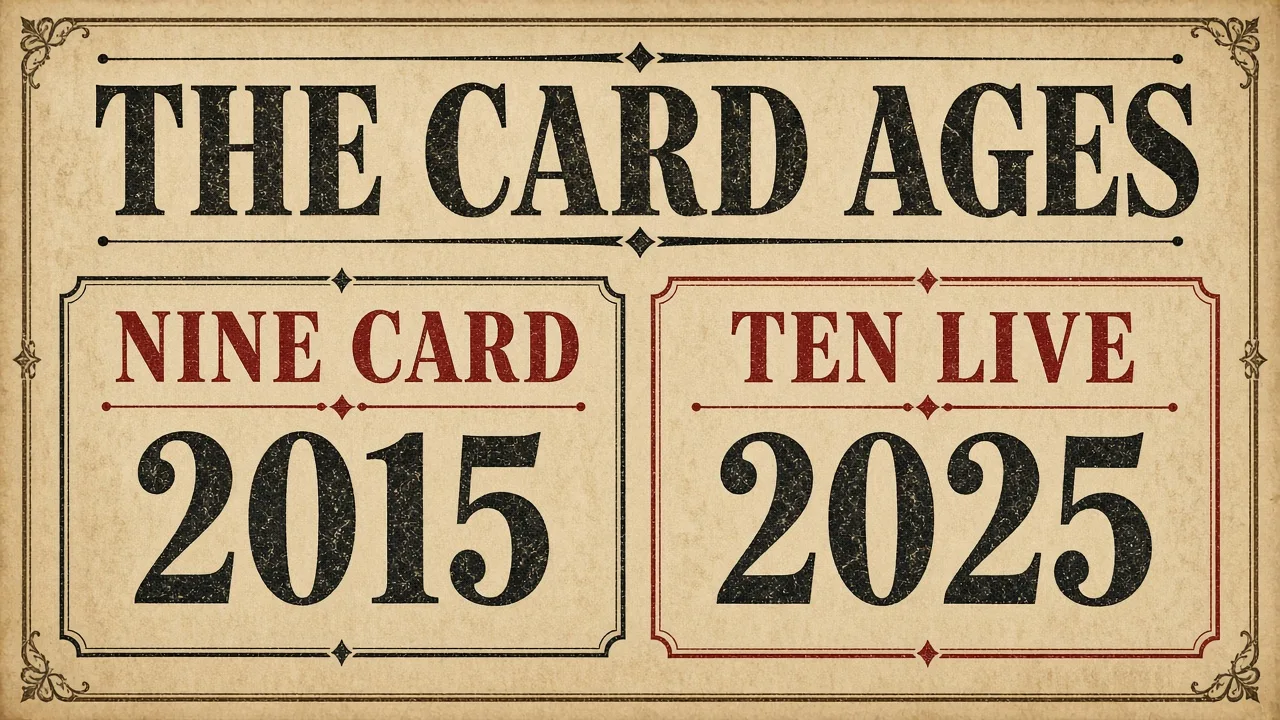
Nine on the locker, ten on the live page
ANA says the 2025 revision kept what was current and changed what was necessary. The nine 2015 provisions were retained and edited. A tenth was added for ethical issues that are global. ANA also keeps a relational map: nurse to patient, nurse to nurse, nurse to self, nurse to profession, nurse to others, nursing to society, and nursing to the global community. We will not invent a mnemonic that replaces that map. Open the provisions page the week you teach, write, or argue.
Provision 4 is the one a fifth admission tests. Nurses have authority over nursing practice and are responsible and accountable for that practice. Provision 5 is the one a body that has not eaten since eleven tests. The nurse has moral duties to self, including an expectation of a safe place to work. Provision 6 is the one a unit that has been short for eleven months tests. Nurses, alone and together, establish and improve the ethical environment of the work setting. Those are ANA’s public first sentences, not our rewrite. The interpretive statements are where “what do I do at 6:48” actually lives. Read them there.
The fifth admission still has your name
A charge nurse can assign. A charge nurse cannot take your name off the assignment. If you accept a fifth admission you believe you cannot safely take, the Code still wants your authority and your accountability. So does the Practice Act. So does the incident report if a second patient seizes while you are in the fifth room.
This is not a dare to refuse every extra. It is a demand to say the sentence out loud. “I can take the admission if X happens. I cannot take it if Y stays on my board.” Put it in the charge nurse’s ear and, if the building allows, in a note. A shrug is also a decision. The Code does not disappear because the unit is short. The policy does not disappear because the Code sounds kinder.
Ask how the building wants an unsafe-staffing objection recorded. Ask who is on call when the charge nurse is the person creating the load. Get that in the same place you keep the fire-pull instructions. Do not wait for the fifth admission to invent a process.
The phone is a record
NCSBN’s social-media guidance is older than disappearing stories and still sharper than most group chats. Nurses have an ethical and legal obligation to keep patient privacy. Do not transmit a patient-related image. Do not post information that can reasonably identify a patient. A name is enough. A room number plus a unit plus a night can be enough. Privacy settings are not enough. Do not take photos or videos of patients on a personal phone. Follow the employer’s device rules when a photo is actually part of care. Read NCSBN’s social media brochure (PDF) and the professional boundaries page.
Boards can investigate a post as unprofessional conduct, unethical conduct, a breach of confidentiality, or mismanagement of records, depending on the state’s list. A job can end before the board writes. A civil claim can sit next to both. “I didn’t use the name” is not a defense if the person in the next bed’s family can tell.
The Code’s nurse-to-patient provisions are the moral sentence underneath that PDF. Advocacy and a trusting relationship do not survive a story you posted for a laugh. The Practice Act is the legal sentence. The policy is the one that can fire you on Monday.
The colleague you would not want
Provision 3 is the advocacy line. Provision 6 is the environment line. Together they are why a smell of alcohol on a night nurse is not “not my business.” You are not the board. You are not employee health. You are the person who will inherit that assignment if you stay silent and the patient does not.
Use the building’s impaired-colleague path. If there is no path, that is a Provision 6 problem and a policy problem. Document what you observed, not what you diagnosed. Do not diagnose. Do not gossip it into a group chat. A group chat about a colleague is also a record.
Just culture belongs here, and it belongs to ANA’s own interpretive language around errors: report, look at the system, do not hide. Discipline for an error after the system is ignored is a different sentence than covering a diversion. Do not use “just culture” as a blanket for a colleague who is unsafe tonight.
Walking off is not a provision
The Code can tell you that a workplace must be safe enough to practice. The Practice Act can still treat a walk-off as abandonment. Those two sentences can be true in the same hour. We will not write a national abandonment definition. States write their own. Read yours before you resign in a hallway. Ask the board’s public FAQ, not a TikTok lawyer.
If you are going to refuse an assignment, refuse it before you take report on that patient, if the building’s rule works that way. If you already have the assignment, you still have the name. Stay inside the process the policy printed. Call the supervisor whose job is to hear that sentence. Then write what you said.
What not to recite this month
If the next exam is NCLEX, sit NCLEX. A recitation of ten provision numbers will not teach the license exam. NCSBN writes items about safety, rights, and professional conduct. Those items are not an ANA book quiz. If you are still in school, your syllabus named a chapter. Read that chapter and the live Code page. Do not study a 2015 nine-provision Quizlet because it was free.
If you already hold the license, name the document you are actually holding tonight: the assignment, the phone, or the colleague. Stay in that document until the action is written down. Official language stays with ANA and the board. Unofficial practice will not replace either. Sit practice questions in the exam that is actually in front of you. The Nursier editorial team wrote this.
After you name the document
Write four facts: which document you are using, what you said out loud, where you wrote it, and which board governs the license on your badge. Then close the nine-provision meme. A complete-list tab is not an assignment. A disappearing story is not off the record.
We do not take ANA book fees. We do not take board complaint fees. Those offices keep those payments. We do not investigate nurses.
Common questions
Is the Code of Ethics a law?
No. The Practice Act is the law. The Code is the profession’s ethical standard. Some boards still use the Code when they judge conduct. Read both.
Why does my hospital card still say nine provisions?
It is probably the 2015 Code. The 2025 Code has ten. Use ANA’s live page. Ask education to reprint the card.
Can I post a funny patient story if I hide the name?
NCSBN says not if the person can still be identified, and not if the post is disparaging even without a name. Privacy settings do not fix it. Do not take the photo on your phone.
If I refuse an assignment, is that abandonment?
It depends on whether you already accepted the patient and on your state’s definition. The Code does not write that definition. The board does. Ask before the hallway argument.
Does NCSBN discipline nurses for ethics?
NCSBN does not license you. Your board does. Report conduct to the board where it happened.
Do I need to memorize all ten provisions for NCLEX?
You need to practice safely and professionally. Reciting provision numbers is not the exam. Sit the kind of item NCSBN actually writes.
Sources
Confirm the live Code and your own Practice Act. Cards and PDFs age.
- ANA, 2025 Code of Ethics home
- ANA, 2025 Code provisions
- ANA, Code of Ethics for Nurses (2025 book)
- NCSBN, find your Nurse Practice Act
- NCSBN, authority and discipline statement (PDF)
- NCSBN, a nurse’s guide to the use of social media (PDF)
- NCSBN, professional boundaries
Nursier is independent. We are not affiliated with, endorsed by, or sponsored by ANA, NCSBN, or any board or hospital. This article is planning copy. It is not the Code, not a Practice Act, and not legal advice. The Code of Ethics for Nurses is ANA’s work. Read it there.