A student guide to quality improvement that starts with a number
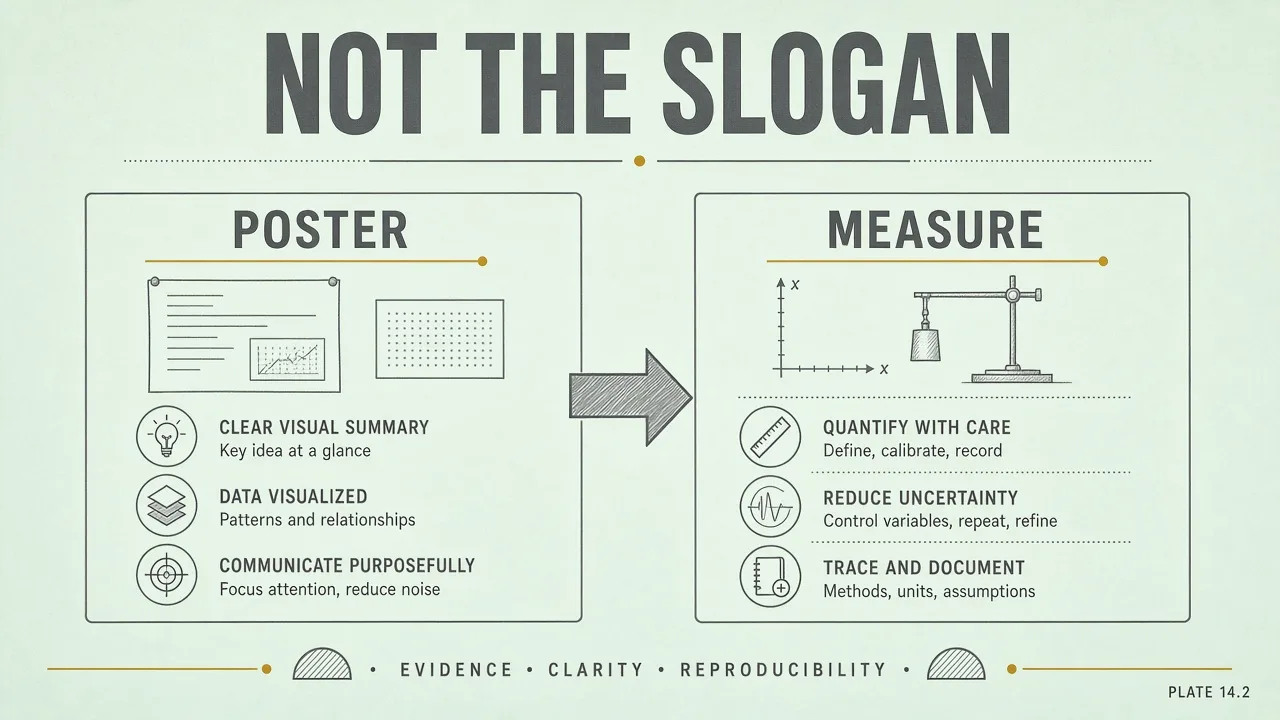
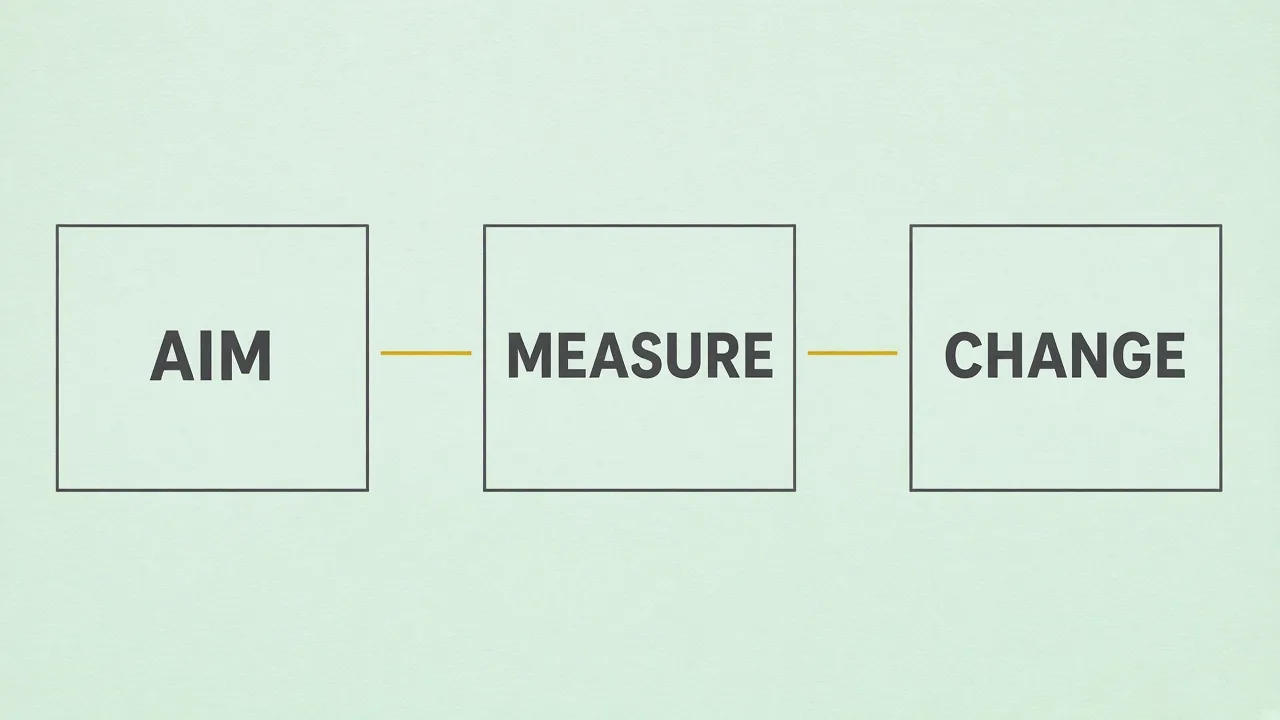
Quality improvement in nursing is using data to test a small change and see whether care got better. IHI’s Model for Improvement asks three questions: what are we trying to accomplish, how will we know a change is an improvement, and what change can we test. Then you run a PDSA small enough to finish. A Minneapolis lab tab full of “ten easy QI ideas” that starts at “remind people to wash their hands” has skipped the model. A fall poster with a maple leaf and no numerator has skipped it too.
This guide is how to write an aim, a measure, and one honest cycle without inventing a national rate or freelancing in someone else’s protocol. Ethics and data belong together: the Code is not the Practice Act. Accreditation later asks whether a school can even talk about outcomes: accredited programs. Nursier does not run a unit QI office.
How to start a student QI project that is actually QI
Search results love “student’s guide” and a numbered list. Falls. Hand hygiene. Call-light response. The list is not wrong as a menu of unit worries. It is wrong as a method. IHI’s Model for Improvement, developed by Associates in Process Improvement, does not start with a theme. It starts with three questions that can be asked in any order, and a cycle for testing a change. Read IHI’s Model for Improvement.
The three questions are public and short. What are we trying to accomplish. How will we know that a change is an improvement. What change can we make that will result in improvement. A paper that answers none of them and still says “PDSA: wash hands” is a slogan with four letters taped on.
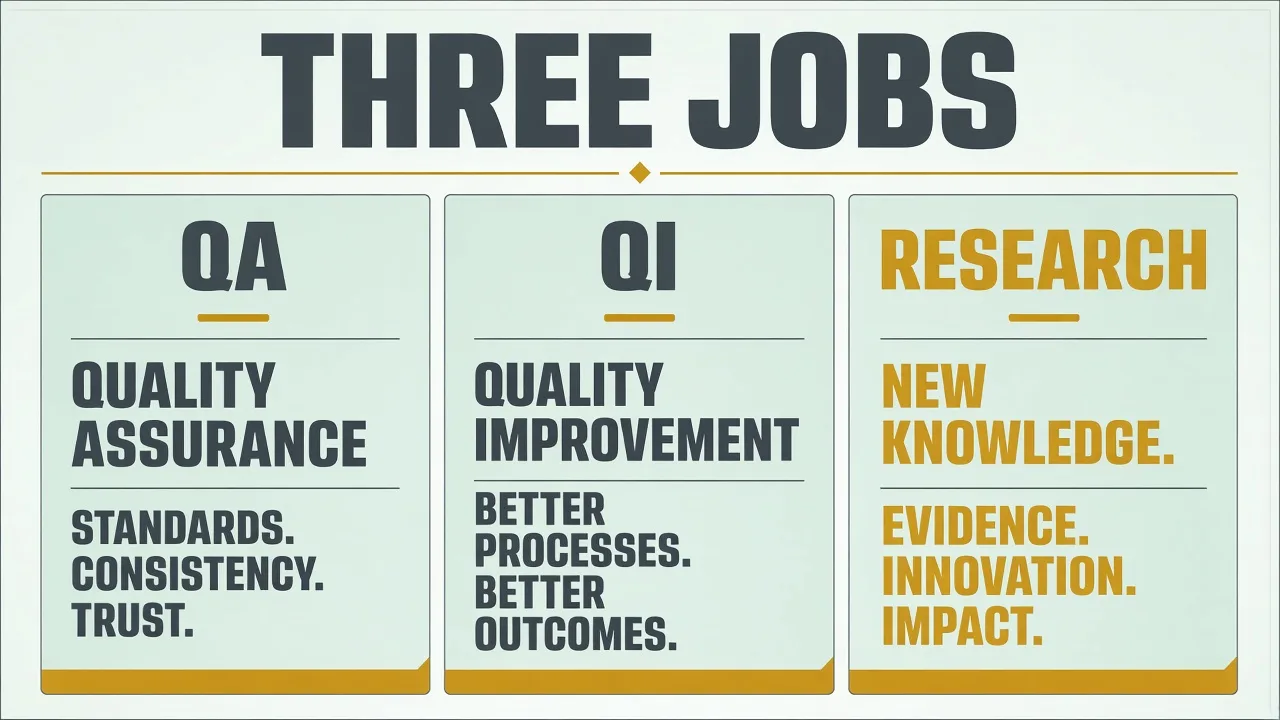
QA, QI, and research are three jobs
Quality assurance watches a standard. Did the unit meet the rule it already has. Quality improvement analyzes performance and tries, on purpose, to move it. Research is a systematic investigation designed to produce generalizable knowledge. NIH’s IRB office is blunt: QA and QI can become research when the point is knowledge beyond that institution. Publishing a QI story does not automatically make it research. Randomizing people, testing something outside current practice, or adding risk can. Read the split, then ask your school’s IRB or the hospital’s QI office before you treat a clinical site as a lab. A useful public walkthrough is AHRQ’s approach to the quality improvement process.
A student who copies last quarter’s audit and writes “the unit should try harder” has done a weak QA paragraph. A student who changes how a night nurse documents without asking has not done QI. They have freelanced in someone else’s process. A student who wants to prove a new teaching method works for all Minnesota ADNs has wandered into research language and needs a different door.
What QSEN actually asked students to do
QSEN’s pre-licensure quality-improvement competency is one sentence. Use data to monitor the outcomes of care processes and use improvement methods to design and test changes that continuously improve quality and safety. The knowledge, skills, and attitudes underneath that sentence are not a poster contest. Seek outcome data in the setting where you practice. Use tools that make a process visible. Use measures to see performance. Design a small test of change, including a Plan-Do-Study-Act. Value measurement. Value local change. Read the QSEN pre-licensure competencies.
QSEN also names a tension students feel in their bones: you are part of a system, and the system is not your personal autonomy. A perfect personal habit that the unit cannot see is not an outcome measure. A root-cause conversation after a sentinel event is a skill QSEN lists. It is not a solo homework assignment you open in the computer lab without the building.
An aim that can fail
IHI’s aim page is the paragraph most idea-lists skip. An aim is time-bound and measurable. It names how much and by when. It names the people whose lives change. It names the place. “Reduce falls” is a theme. “Reduce assisted falls on 4 West among adults 65 and older from X to Y by March” is an aim, and only if X is a real number the unit already owns. IHI prefers a month and year, not “within ten months.” Numerical goals have to be rational. They need a line of sight to the change, the people, and the measurement system. Read IHI on setting aims.
If you cannot get X, you do not have an aim yet. You have a worry. Write the worry. Then ask the educator or the QI nurse whether a baseline exists. Do not invent X from a national blog. We will not invent a national fall rate, a national hand-hygiene rate, or a CMS number that belongs to a different building.
The numerator the poster hid
IHI’s second question is how you will know. Teams use quantitative and qualitative feedback. They often need more than one kind of measure: an outcome the patient can feel, a process that should move if the change is real, and a balancing measure that catches the harm you did not mean. A call-light response time that improves because nobody is turning patients is not a win. Write the balancing measure before the cheer.
A poster that says “we reduced falls” without a count, a time window, and a definition of a fall is decoration. Ask what counts. Assisted versus unassisted. In the bathroom versus in the hall. Per 1,000 patient-days or per discharge. If two nurses on the same unit would code the same event differently, you do not have a measure. You have a conversation.
Do not take unit data home on a personal phone. The ethics problem is the same one as a disappearing story. If you need a number for class, ask how the building de-identifies it and who signs that out. Keep the Code, the Practice Act, and the policy in the same sentence as the spreadsheet.
One cycle is not a semester poster
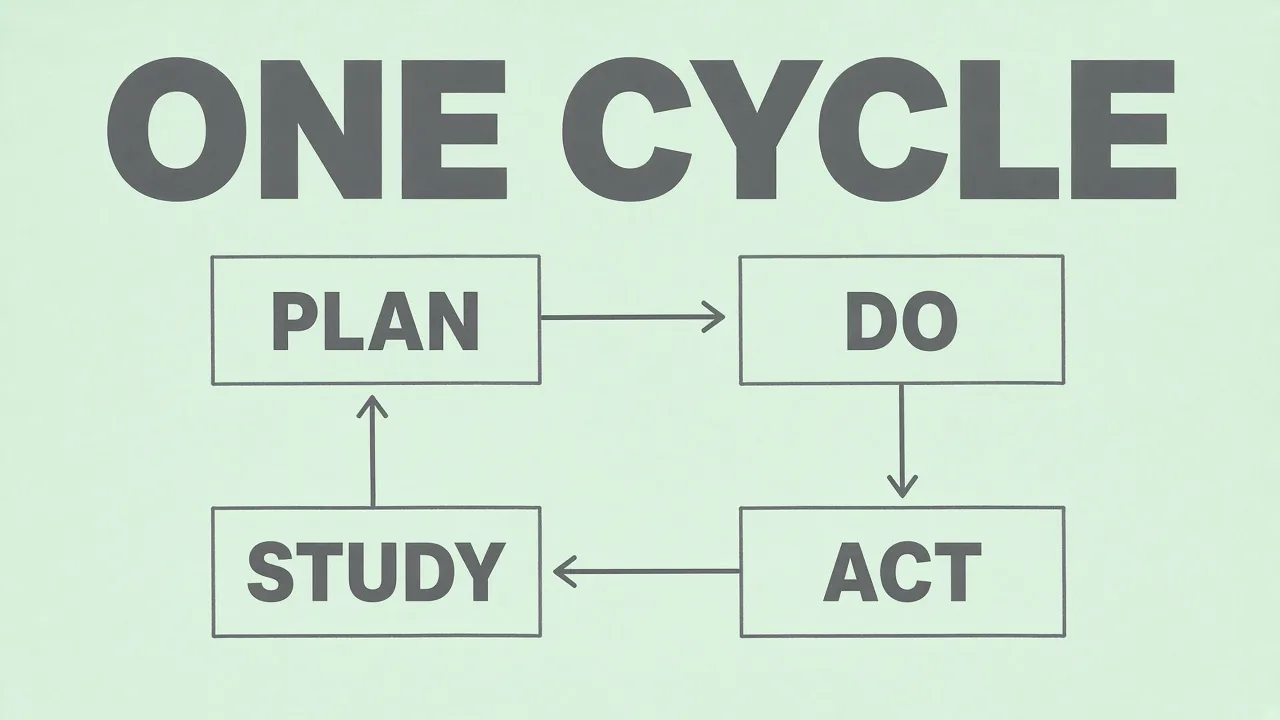
IHI calls PDSA the scientific method adapted for action. Test on a small scale. One patient. One day. Plan the test and the data. Predict what you will see. Do it. Write what surprised you. Study the data against the prediction. Act: keep, change, or drop. Then the next cycle starts. Most changes need many cycles, in the morning and at night, on a holiday and a Tuesday, before anyone should “implement.” Implement means the building makes it permanent. A student paper is not implementation. Read IHI on testing changes.
A four-box graphic in a slide deck is not a cycle. If the “Do” never happened, you wrote a plan. If the “Study” is “staff liked it,” you skipped the measure. If the “Act” is “the unit should adopt this hospital-wide,” you skipped scale.
What a student can touch
You can usually map a process you watched. You can usually ask for last quarter’s already-public unit measure. You can sometimes run a tiny test that the preceptor already owns: a script at the bedside, a checklist the unit printed, a time you will collect with a paper tally the educator approved. You cannot usually rewrite a medication policy, randomize patients, or export a spreadsheet to Canva.
Write the constraint in the paper. “I had eight observation hours. The unit’s fall definition is X. I did not have authority to change Y. The test was Z on one shift.” That paragraph is more honest than a national idea list, and it matches QSEN’s local-change attitude.
If you do not yet hold a seat in a program, this article is early. Finish the school door first. Start with how to become a nurse in the U.S..
What not to invent this month
If the next exam is NCLEX, sit NCLEX. A QI poster will not teach the license exam. Safety items on that exam are not a PDSA homework. If the paper is due Monday and you still have no baseline, write the three questions and the barrier. Do not invent a 30-percent improvement because a listicle said students should “show impact.”
Official language stays with IHI, QSEN, AHRQ, and the unit that owns the data. Unofficial practice will not replace a denominator. Sit practice questions in the exam that is actually in front of you. The Nursier editorial team wrote this.
After you name the measure
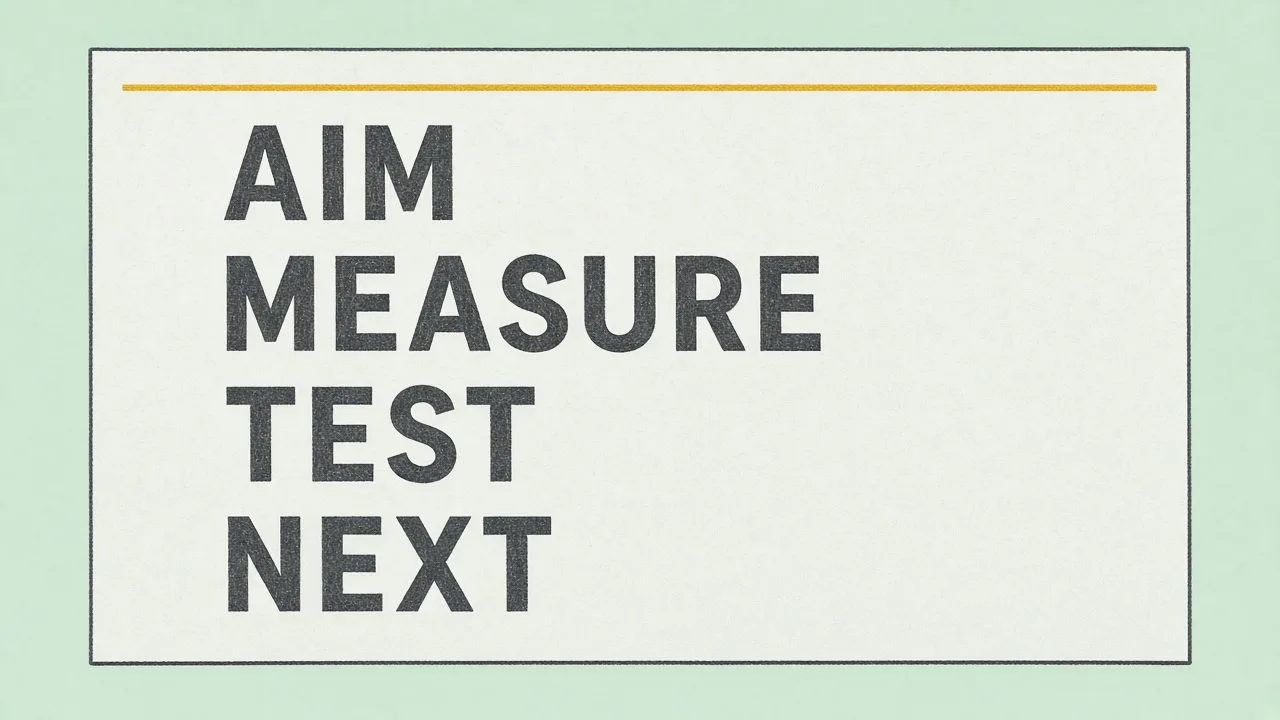
Write four facts: the aim with a number and a date, the measure with a numerator and a denominator, the smallest test the building will allow, and whether this is QI or has drifted into research. Then close the ten-ideas tab. A slogan is not a cycle. A complete-list of student projects is not a baseline.
We do not take hospital quality-reporting fees. We do not take IRB fees. Those offices keep those payments. We do not grade clinical papers.
Common questions
Is a literature review quality improvement?
It can inform a change idea. It is not a PDSA. QI still needs a local aim, a local measure, and a test in that place.
Do I need IRB approval for a student QI paper?
Ask the school and the site. Local improvement with no extra risk is often not research. A project meant to produce generalizable knowledge, or one that randomizes or tests something new, can be. Do not guess from a blog.
What is a good QI topic for a nursing student?
The one with a baseline the unit already keeps and a test you are allowed to run. There is no honest national topic list that survives a Monday due date.
How many PDSA cycles do I need?
IHI says most changes need many, in more than one condition, before implementation. A student paper may only finish one small cycle. Say so. Do not pretend one shift implemented a hospital policy.
Can I use national CMS or Joint Commission rates as my baseline?
Those rates describe other buildings, other definitions, other years. Your aim needs the unit’s number. National pages can motivate. They cannot replace X.
Is “staff will be educated” a change?
It is a common first idea. It is only a change if you can measure whether the process moved, not whether people sat in a room. Education without a measure is another poster.
Sources
Confirm live IHI and QSEN pages. Models and KSA tables move.
- IHI, Model for Improvement
- IHI, setting aims
- IHI, testing changes (PDSA)
- QSEN, pre-licensure competencies
- AHRQ, ways to approach the QI process
Nursier is independent. We are not affiliated with, endorsed by, or sponsored by IHI, QSEN, AHRQ, AACN, CMS, The Joint Commission, or any school or hospital. This article is planning copy. It is not a graded assignment, a QI approval, or a research protocol.