What an online nursing program is, and what it is not
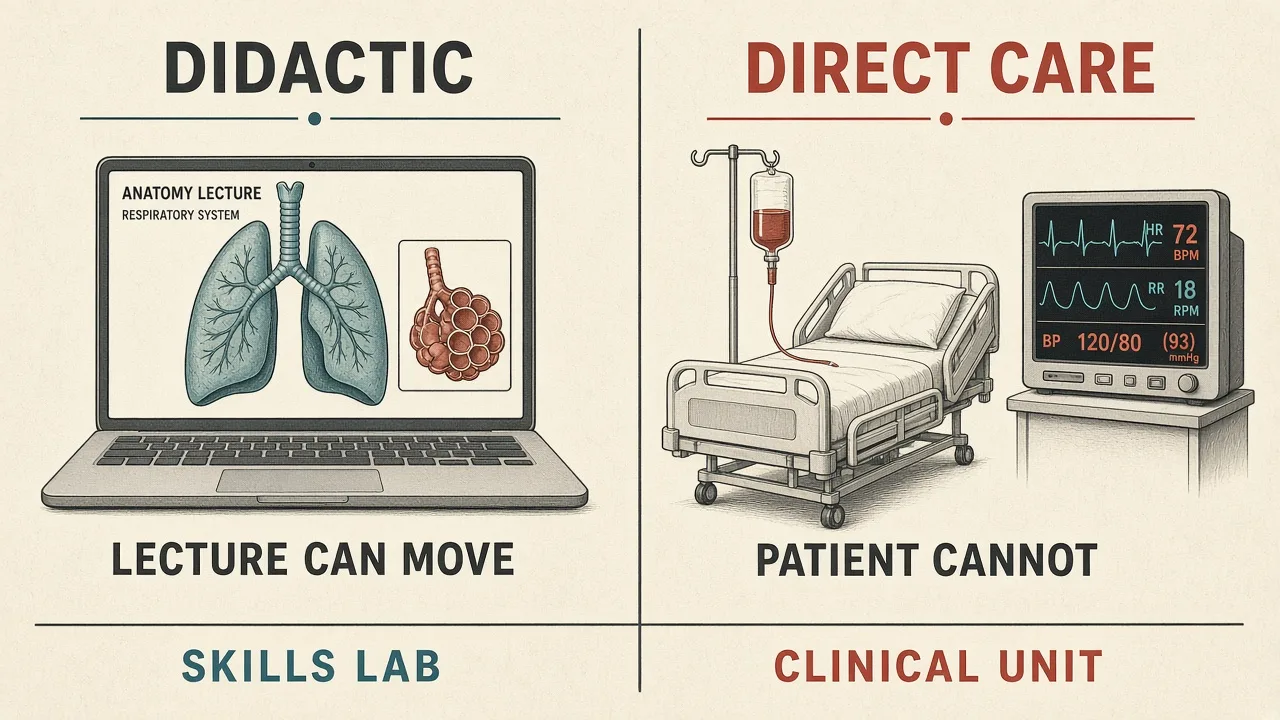
An online nursing program is a board-aware, accredited track whose lectures can move to a kitchen table in Columbus, Phoenix, or a one-bedroom outside Houston. The patient cannot move with them. Didactic work happens in a browser. Skills, simulation, and direct care still happen in a building. If you remember only one sentence from this page, remember that one. Ranked lists skip it. Deposit buttons skip it. Boards do not.
People search this phrase for four different products: an RN-to-BSN while they keep a night shift, an accelerated BSN after a biology degree, a first ADN or prelicensure BSN with evening lecture, or a graduate NP seat. Mix those four and you will buy the wrong catalog. This guide separates them, then walks accreditation, clinical placement, SARA, hidden costs, and the questions that save a semester. How to score any campus, online or not, is accredited nursing programs worth a closer look. Time zones and Saturday labs are proctors and weekend intensives.
Nursier does not accredit programs or collect tuition. When you finish a first-license track, you still sit NCLEX-RN or NCLEX-PN through Pearson. That fee is not ours.
What “online nursing program” actually means
In nursing, “online” almost never means the whole license happens on a laptop. The lecture can move. The patient cannot. Prelicensure programs still send you into direct care. Post-licensure programs still expect practice experiences. The U.S. Department of Education–recognized nursing accreditors treat distance delivery as a method, not a waiver. CCNE says online offerings still need clinical practice experiences. ACEN accredits the whole program at that degree level, including the online option, which means the clinical piece is inside the same stamp.
So the useful split is not “online versus real.” The useful split is this:
- Didactic online. Pathophysiology at the kitchen table. Discussion posts after a twelve-hour shift. Tests in a browser or a proctored window.
- Skills and simulation. Some programs bring you to campus for long weekends. Some use a local partner lab. Some mix both.
- Direct care. A unit, a clinic, a long-term care floor, a community site. A faculty member still plans, watches, and grades that work.
If a page promises a first RN or PN license with “no clinicals,” stop. That is not how U.S. licensure is built. NCSBN’s education pages are blunt about the model: boards approve programs so graduates can be made eligible for NCLEX. Faculty sign that the graduate is safe enough to test. You cannot outsource that signature to a video library. Read NCSBN on approval of nursing education programs before you trust a slogan.
If you already hold a license and you want an RN-to-BSN, the hours look different. You are not repeating fundamentals. You are still expected to show practice across the work of nursing, not only upload papers. AACN’s Essentials FAQ is the clean public source for that distinction. It does not invent a magic hour count for every entry-level program. It does say practice has to be real enough to prove the competencies. Start at AACN Essentials FAQs.
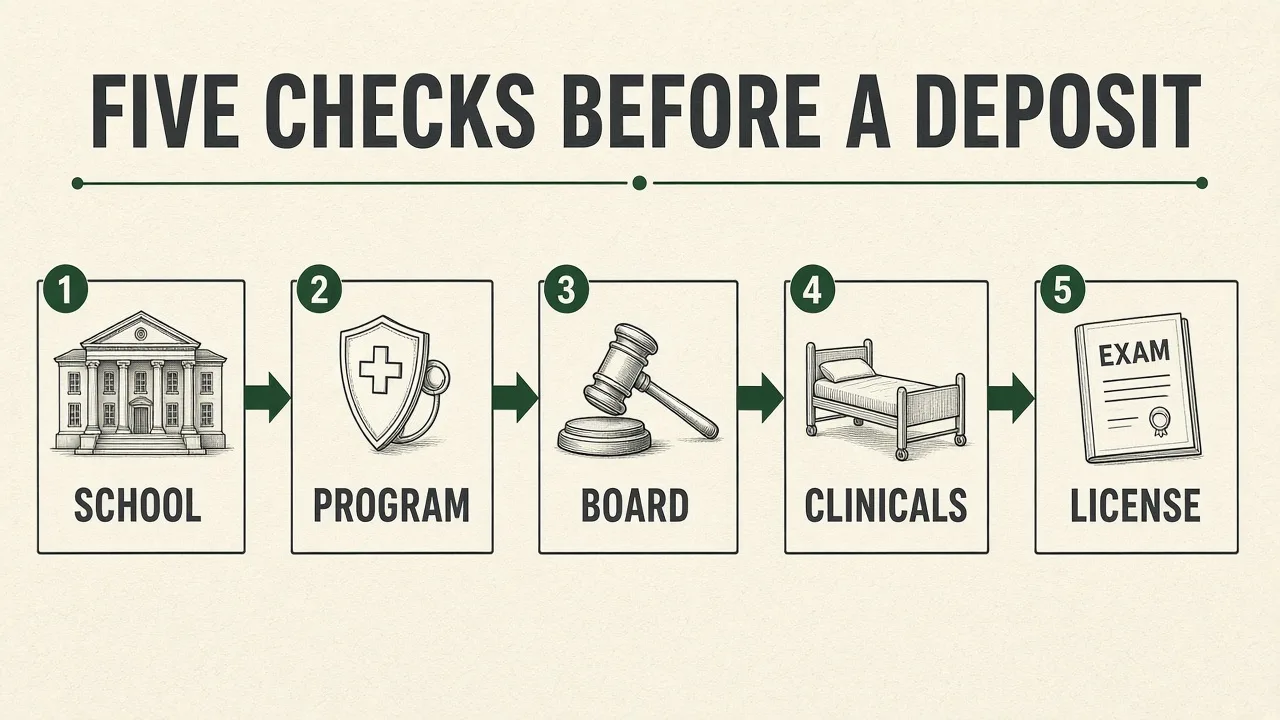
The five checks before you pay a deposit
Write these on a sticky note. Do not rearrange them because a recruiter is warm on the phone.
- School stamp. The college or university holds institutional accreditation recognized for Title IV aid if you need federal loans. Confirm the institution in the federal database, not on an ad. Use the Department of Education accreditation agency list and the school’s own accreditation page.
- Program stamp. The nursing program holds programmatic accreditation from a U.S. Department of Education–recognized nursing accreditor: CCNE, ACEN, or NLN CNEA. Search the accreditor’s directory, not a badge copied into a footer.
- Board stamp. The board in the state where you will seek the license approves that prelicensure program, or has a written path for that out-of-state program. Approval and accreditation are not the same word.
- Clinical plan. A named process for sites in your county or a county you can reach. A date when sites are assigned. A sentence about what happens if the first site says no.
- License-exam eligibility. A written statement that graduates of this track, in your state, are eligible to apply for NCLEX. If the answer is “most students,” ask for the board page.
People skip from check one to a deposit because the payment link is pretty. The expensive mistake is check four. A program can be accredited in another time zone and still have no hospital within an hour of your apartment. That is not a secret. It is a logistics problem that belongs in the first email, not the last.
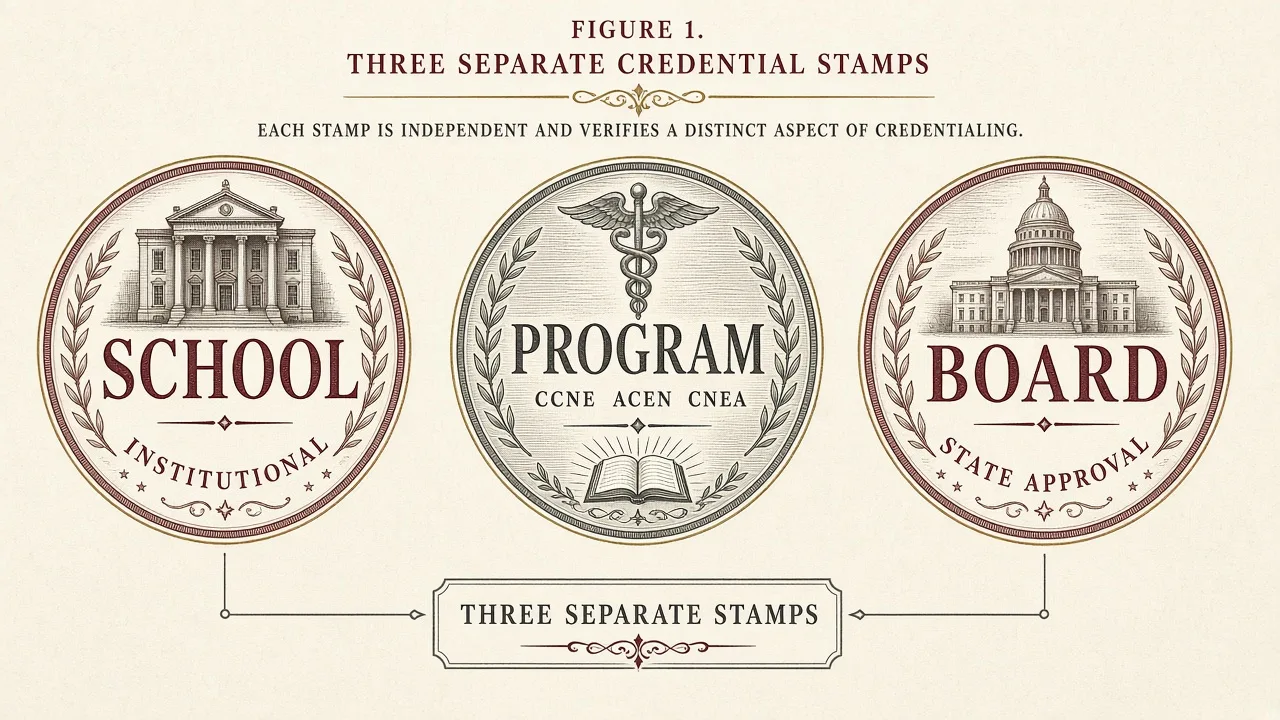
School stamp, program stamp, board stamp
The school stamp
Institutional accreditation answers a boring, necessary question: is this a real college. It does not answer whether the nursing track is fit for a license. A school can be accredited and still run a nursing option that your board will not touch. Do not let a recruiter collapse those sentences.
The program stamp
Three U.S. Department of Education–recognized programmatic accreditors cover nursing education in ordinary American use:
| Accreditor | What it commonly covers | Where you verify |
|---|---|---|
| CCNE | Baccalaureate, graduate, and selected residency or fellowship programs | CCNE accredited programs directory |
| ACEN | Practical, diploma, associate, baccalaureate, master’s, and clinical doctorate programs, including distance delivery of that program | ACEN FAQ on online programs |
| NLN CNEA | All program types, including distance education; recognized by the Department of Education as a programmatic accreditor | NLN CNEA FAQs |
ACEN’s public FAQ is the sentence students need in writing: accreditation attaches to the program at the degree or certificate level, including the online option. You do not need a second, secret online stamp. You do need the directory row to match the exact degree you will finish. An accredited RN-to-BSN is not proof that a prelicensure BSN at the same school is the track you think it is. Read the row. Read the dates. ACEN also reminds readers that you count as a graduate of an accredited program only if your graduation date falls inside the accreditation period.
The board stamp
Your nursing regulatory body approves prelicensure programs so it can trust the faculty signature that sends you to NCLEX. Some boards also require national nursing accreditation by rule. NCSBN keeps a public page and map for that. Start at NCSBN program approval. Then open your own board’s education page. Do not substitute a Facebook comment for a board PDF.
If you will apply in Texas, read Texas. If you will apply in Ohio, read Ohio. Compact privileges come after a license, not instead of a program approval. The Nurse Licensure Compact does not turn an unapproved program into an approved one.
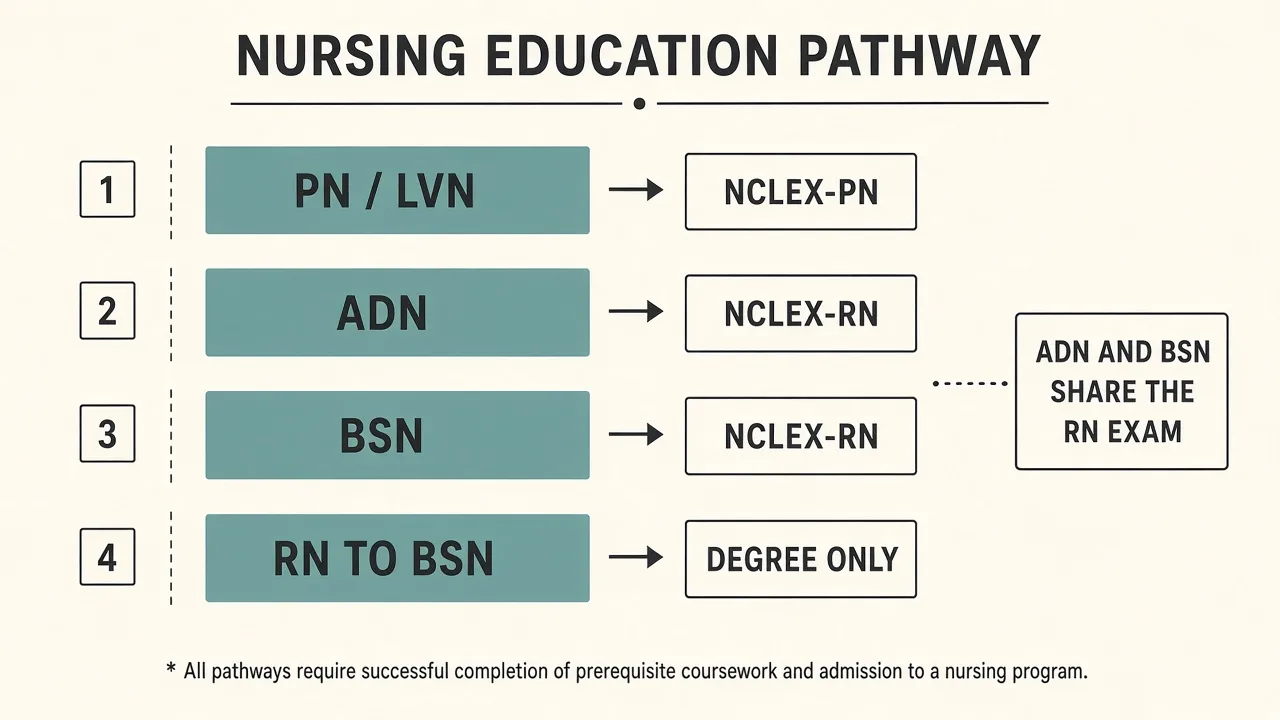
RN-to-BSN, ABSN, ADN, and graduate tracks
The search “online nursing programs” is several products in one box. Separate them before you compare tuition. Working RNs upgrading a degree, career-changers with a biology bachelor’s, and first-license ADN applicants are not shopping the same seat.
| Track | Who it is for | What “online” usually covers | The license question |
|---|---|---|---|
| Practical or vocational nursing | A first PN or LVN license | Lecture online or hybrid; skills and clinicals in person | Will this board let graduates sit NCLEX-PN? |
| ADN | A first RN license at the associate level | Same split: lecture can move, patients do not | Is this associate program board-approved where you will apply? |
| Prelicensure BSN or accelerated BSN (ABSN) | A first RN license at the bachelor’s level. ABSN is for people who already hold a non-nursing bachelor’s | Lecture online or hybrid. Skills intensives and clinicals in person. ABSN calendars are dense | Same board question, plus how far the intensives sit from your job |
| Direct-entry MSN | A career-changer who wants graduate nursing without a BSN first | Didactic online is common. Prelicensure clinicals and later specialty hours still sit in buildings | Will this track make you eligible for NCLEX, then for the later certification you actually want? |
| RN-to-BSN | An RN who already holds a license | Most of the coursework can be online. Practice experiences still exist. | You already tested. You are buying a degree, not a first ATT. |
| MSN or DNP | A graduate role, often with a specialty | Didactic online is common. Clinical hours are not optional. | Does this track meet the certification and board rules for that role in your state? |
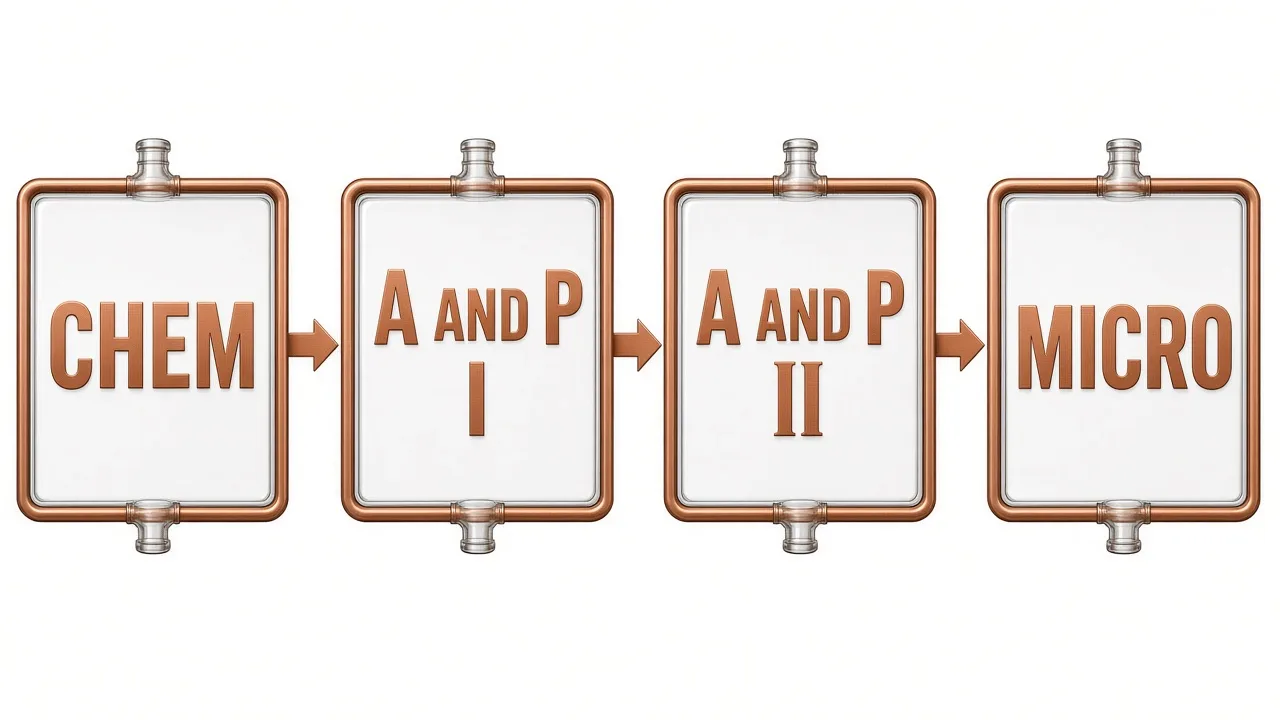
If you are still choosing the first license, study at the RN level or the PN level, matching the license you actually want. Do not shop an RN-to-BSN page because it loaded faster. An ABSN is not a shortcut license. It is a compressed first RN. Hidden months and dropped shifts live in how long school really costs. Science recency can block an ABSN start; that chain is the science sequence.
Time-to-finish claims belong in a catalog with a footnote. A “12-month BSN” can be true for a person who already holds a degree and a clear calendar. It is not true for a person working nights with one car. Ask for the median finish time for students who work 32 hours or more. If they cannot say, believe the silence.
Who an online program actually fits
Online lecture fits a night-shift RN in rural West Texas who cannot leave a unit for a Tuesday seminar. It fits a parent in Atlanta who can sit pathophysiology after bedtime. It fits a soldier on a new posting who needs a school that already knows the next state’s board. It does not fit a first-license student whose nearest partner hospital is a rumor, or a person who needs a faculty member in the hallway every week to stay honest.
- Working RNs. RN-to-BSN is the usual online product. Practice experiences still exist. Magnet postings still name the degree.
- Career-changers with a bachelor’s. ABSN or direct-entry MSN. Expect campus intensives and a calendar that eats a job.
- First-license ADN or BSN students. Hybrid is more honest than “100% online.” Run the five checks before a deposit.
- Graduate NP students. Didactic can move. Preceptors cannot. Who finds the preceptor is the question. Keep that on NP programs.
Costs catalogs bury
We will not invent a national tuition or a fake kit price. We will name the lines people miss when they compare “per-credit” numbers.
- Home skills or simulation kits on ABSN and some entry-level tracks.
- Clinical-tracking and compliance platforms the hospital already named.
- Travel and lodging for mandatory immersion weekends.
- Repeat background checks and drug screens when the site packet is newer than the school packet.
- Proctoring hardware, a quiet room, and a second webcam if the first one fails the check.
- Entrance-exam seats and, later, NCLEX and board fees. Those checkouts stay with ATI, Elsevier, NLN, Pearson, and the board.
- Lost shifts during clinical blocks. That is calendar, not tuition. See how long school takes by license.
Add those lines to the net-price calculator before you call the “affordable” program cheaper. A lower per-credit rate with three hotel intensives can cost more than a local hybrid with a bus ride.
NC-SARA, your state, and clinicals across a line
NC-SARA is the compact that helps colleges offer distance education across many states without a separate consumer-protection filing in each one. It is useful. It is not a nursing license. NC-SARA says, in public language, that SARA does not replace professional licensing board approval for fields such as nursing. Schools still have to tell you whether the program meets licensure rules where you sit. Read that in NC-SARA’s own description of its work and in its note on notifying students about professional licensure.
Here is the kitchen-table version. A school can be a SARA participant and still lack permission to place you on a unit in the state where you sleep. Some boards want a packet weeks before the first clinical shift. Alabama’s board, for example, publishes distance and out-of-state clinical rules and a lead time. Massachusetts publishes a separate path for out-of-state programs that want didactic or clinical work in the Commonwealth, including an annual packet and a placement packet. Those pages change. Open them if that is your map:
- Alabama Board of Nursing distance and out-of-state FAQs
- Massachusetts out-of-state nursing education program rules
Use those two as a method, not as a national rule. Your board may be quieter or louder. The method is the same: find the education page, search “out of state,” search “distance,” search “clinical placement,” and save the PDF. If the program cannot name that page, they have not done the work you are about to pay them to do.
If you might move during the program, say so on day one. A person who starts in Georgia and finishes in Indiana is two boards, not one brochure. Get both answers in email.
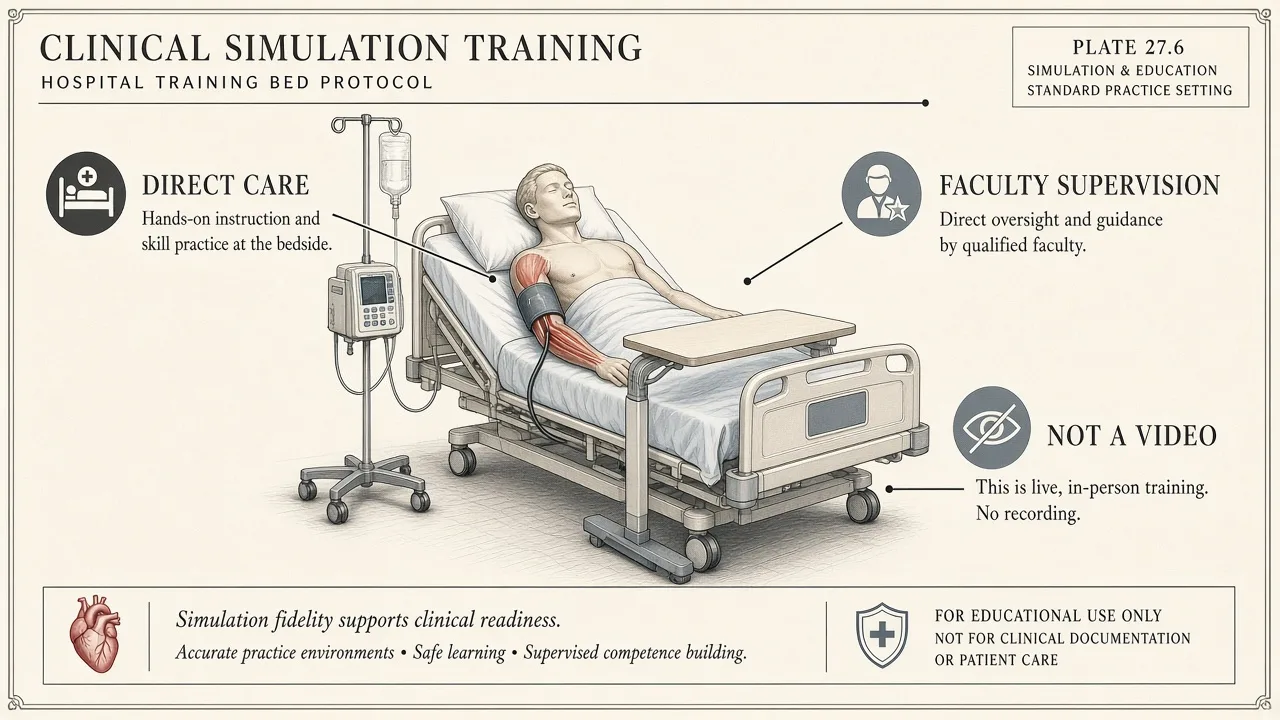
Who finds the clinical site
This is the paragraph that should have been the first result for “online nursing programs.” Some programs place you. Some hand you a list and wish you luck. Some say “we partner with hospitals nationwide” and mean they have a binder of old emails.
Ask these in writing:
- Do faculty secure the site, or do I?
- What is the farthest site you have used for a student in my ZIP code in the last two years?
- When in the calendar are sites confirmed?
- What happens if the first site declines, and who pays the delay?
- Are evenings and weekends actually available, or only listed?
- Is there a required campus intensive, and how many nights in a hotel does that imply?
If you are a CNA or LPN already working on a unit, do not assume that unit will count. Many programs forbid home-unit clinicals, or they limit them. Ask. A yes on the phone that becomes a no in week six is how people lose a semester and a childcare plan.
Simulation can support learning. It does not erase direct care in a prelicensure track. NCSBN model education language and board rules still talk about planned, supervised, evaluated direct patient care. Treat “mostly simulation” as a question for the board, not as a comfort phrase from marketing.
TEAS, HESI, and the week before you apply
Online does not cancel the entrance exam your school named. If the catalog says ATI TEAS 7, that is a four-section report: reading, math, science, and English. If the catalog says HESI A2, that is a school packet. The school picks the sections. Those are not the same test and they are not NCLEX. Prepare for TEAS 7 or HESI A2, whichever the PDF printed. If two schools named two different tests, keep the packets apart.
A person applying to two online ADNs can face two different cut scores and two different calendars. Write the exam name, the required sections, the minimum scores, and the last date a score is accepted. Then sit a short diagnostic in that exam, not in a mixed “nursing quiz” that does not exist in the building where you will test.
Nursier does not sell TEAS or HESI. We do not register you with ATI or Elsevier. Practice here is unofficial. When you are ready to pay the real seat, you pay the company that owns that exam.
Money without invented tuition
We will not invent a national tuition number. Those figures move by school, by residency, by fees, and by how many credits you repeat. Use tools that already exist.
- College Scorecard for the institution: average annual cost, graduation, and borrowing, with the usual limits of institution-level data.
- The program’s own net-price calculator, using your real household numbers, not the sample student in the ad.
- The board’s fee schedule for the application and any fingerprint vendor they name.
- The public NCLEX registration table. We already walked that money in NCLEX cost in 2026 and the 2027 increase. Nursier does not collect those fees.
Add the quiet costs that catalogs bury. A webcam that satisfies the proctor. A second background check when the hospital packet is newer than the school packet. Gas for a clinical site 47 minutes away. A hotel for a skills intensive. Lost shifts. If the “affordable online” pitch only works when you pretend those lines are zero, it is not affordable. It is incomplete.
Federal aid follows eligible programs at eligible schools. A pretty payment plan is not the same as a Title IV program. If you need loans, confirm the program is aid-eligible before you schedule the entrance exam.
How to read an outcomes page
Look for three numbers, and look at the footnote under each one.
| Number | What it should say | How people get misled |
|---|---|---|
| Completion | Share of students who finish the track they entered, with the years used | A rate that quietly drops anyone who paused after week four |
| First-time NCLEX | First-time pass for that exact track, with the year and the board or NCSBN method | A blended rate that mixes campus and online, or RN and PN |
| Employment | Share employed in nursing within a stated window, with how they counted | A survey with twelve replies treated like a census |
If the page shows one glowing percentage and no year, treat it as advertising. NCSBN also publishes broader education data through its National Nursing Education Database. That tool is for patterns, not for picking a single school. Your decision still lives on the program’s own report and your board’s approval list.
Ask for the last three years, not the best year. Ask whether the online cohort is broken out. A campus number does not rescue an online cohort that cannot place clinicals.
The admissions call that saves a semester
Call when you are not tired. Take notes. Ask them to repeat answers onto email. Use this order so they cannot skip the board.
- What is the exact degree name on the diploma, and is that the row in the CCNE, ACEN, or CNEA directory?
- Is this track board-approved in the state where I will apply for the license?
- If I stay in my current ZIP code, who secures clinicals, and when do I get the site name?
- Which entrance exam do you require, which sections, and which score?
- How many campus visits are required, and are those dates published a year ahead?
- What is the median time to finish for students who work 32 hours or more?
- What is last year’s first-time NCLEX rate for this exact track?
- If I move to another state in month eight, what breaks?
If the person on the phone cannot answer items 2, 3, and 7, ask for the nursing program director. Marketing can book a tour. The director owns the board relationship.
Red flags that show up in ordinary English
- “We are accredited” with no agency name and no directory link.
- “Nationally recognized” used as if it were CCNE, ACEN, or CNEA.
- “100% online RN” for a first license, with no clinical paragraph.
- “We are SARA, so you are covered in every state.”
- “Students usually find their own sites. It is easy.”
- A pass rate with no year, no track, and no first-time label.
- Pressure to pay a deposit before you receive the clinical policy in writing.
- A refusal to name the board page that lists the program.
- An entrance exam “prep bundle” sold as if it were the official TEAS or HESI seat.
None of those flags require a law degree. They require a person who will wait 24 hours before paying. The dishwasher can wait. The deposit button can wait.
After you choose, study the exam in front of you
Once the five checks are green, stop shopping. Shopping feels like progress. It is not a clinical hour. If you still owe an entrance exam, sit a short set for that exam. If you are already in a program, keep skills and lecture in their lanes. The week itself is four clocks. Time zones, proctors, kids, and Saturday labs are a later problem than the board, and they still wreck people who skipped that paper. If you are near graduation, study the license exam you will actually see. Those seats are not interchangeable. Use NCLEX-RN or NCLEX-PN, not both at once.
Unofficial practice will not replace your school’s skills lab or a hospital morning. It can keep the question style in front of you while the rest of the house is asleep. Sit practice questions for the exam you already chose. The Nursier editorial team wrote this.
We do not take program deposits. We do not take NCLEX fees. We do not take TEAS or HESI registration. Pearson, ATI, Elsevier, and your board keep those payments.
Common questions
Can I earn a first RN license fully online?
You can complete a large share of lecture online. You still need supervised direct care and, in most tracks, skills time that is not a discussion post. If a page says otherwise, ask the board, not the ad.
Is CCNE better than ACEN?
They are different recognized accreditors with different scopes. CCNE focuses on baccalaureate and graduate nursing. ACEN covers a wider ladder, including practical and associate programs. NLN CNEA is the third recognized programmatic option. Match the directory to your exact degree. Do not pick an accreditor because a forum likes the initials.
Does NC-SARA mean I can do clinicals in my state?
No. SARA helps with distance-education authorization. Your board can still require its own approval before an out-of-state program places you on a unit. Ask for that approval in writing.
I am an LPN. Should I look at online RN programs?
You can. You still run the five checks. LPN-to-RN bridges vary. Some are hybrid. Some still want a local cohort. Keep PN exams and RN exams apart. If ATI LPN or HESI LPN is the exam in front of you now, study that one. Switch to RN-level practice when the bridge is real.
Will an online degree hurt me on a job application?
Hiring managers read the license, the unit history, and whether you can work the shift. They do not grade your Zoom background. They do notice if you cannot explain where you did clinicals. Keep that list.
How do I compare two online ADNs in different states?
Compare board approval where you will apply, clinical distance from your door, entrance exam rules, and three years of first-time NCLEX for that track. Do not compare who has the softer brand color.
What is the difference between an online RN-to-BSN and an online ABSN?
RN-to-BSN assumes you already hold an RN license. ABSN is a first RN for people who already hold a non-nursing bachelor’s. One is a degree. The other is a license door plus a degree.
Do Magnet hospitals accept online BSN degrees?
They read the stamp and the license. Many postings name CCNE or ACEN. They do not grade your Zoom background. They do notice if you cannot name where you did clinicals or practice experiences.
I live in Florida and the school is in another state. Is that “online enough”?
Lecture may be. Clinical placement and licensure notices are Florida-board questions. SARA does not answer them. Ask for the Florida education-page packet in writing.
Sources
Confirm live pages before you pay. Policy tables move.
- CCNE accreditation and the CCNE directory
- CCNE clinical practice FAQs (PDF)
- ACEN frequently asked questions
- NLN CNEA FAQs and NLN CNEA standards
- U.S. Department of Education accreditation agency list
- AACN Essentials FAQs
- NC-SARA, Our Work and professional licensure notices
- NCSBN approval of nursing education programs
- NCSBN National Nursing Education Database
- College Scorecard
- Alabama Board of Nursing, distance and out-of-state FAQs
- Massachusetts out-of-state nursing education programs
- NCLEX fees and payment
Nursier is independent. We are not affiliated with, endorsed by, or sponsored by NCSBN, Pearson VUE, ATI, Elsevier, CCNE, ACEN, NLN CNEA, NC-SARA, or any state board. This article is planning copy. It is not an application, and it is not legal advice.