First-pass metabolism: why the same drug name is not the same dose
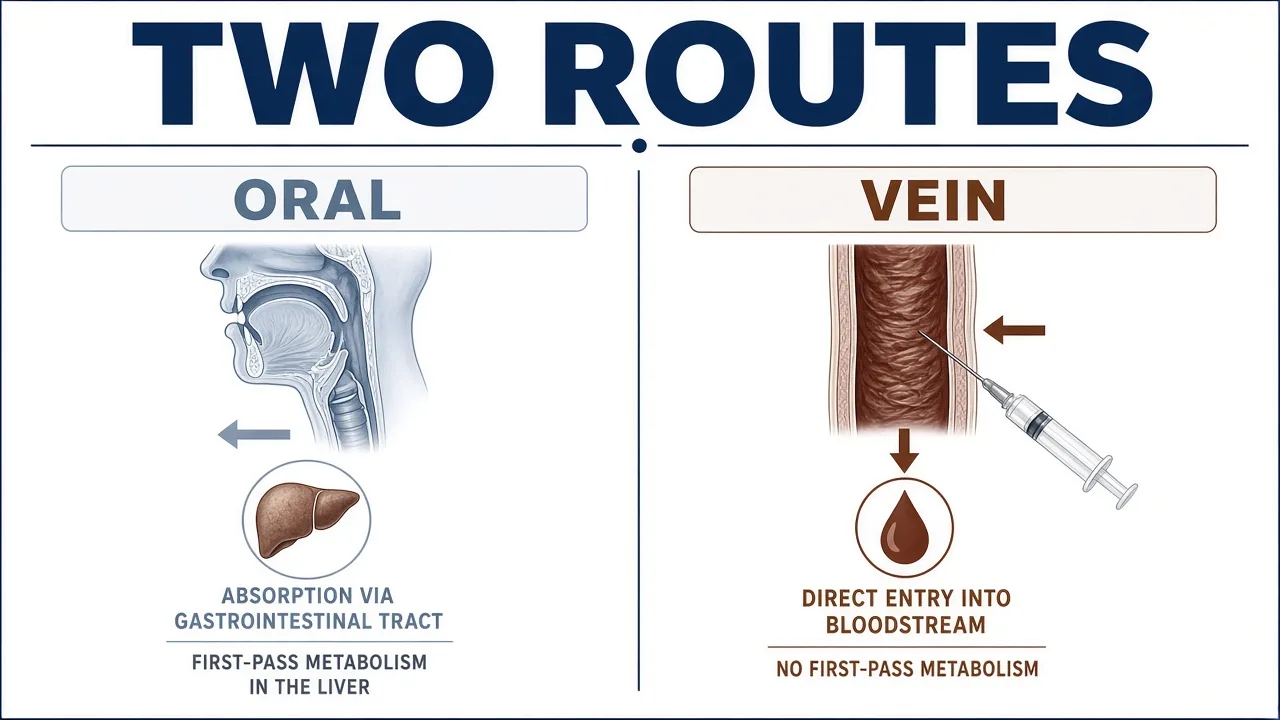
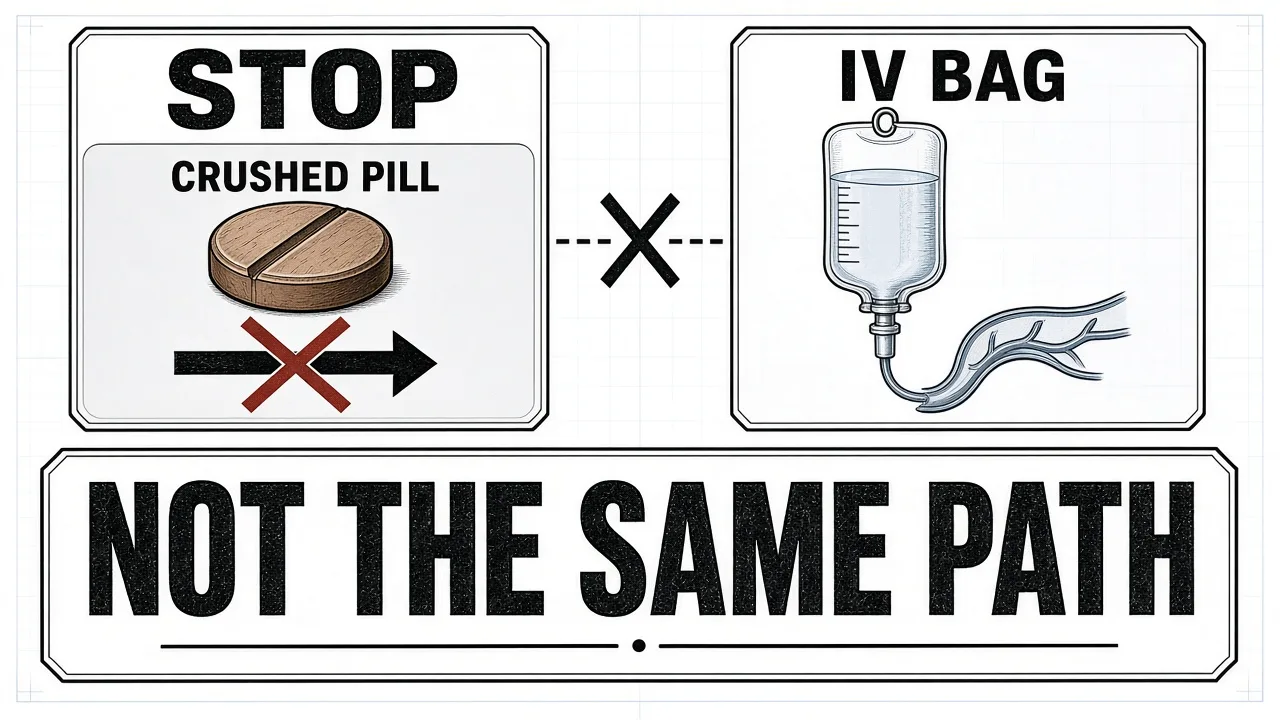
First-pass metabolism is what happens to a swallowed drug before the rest of the body ever sees it. The tablet is absorbed from the gut, sent through the portal vein, and changed in the gut wall and the liver. Only the fraction that survives that first look reaches systemic blood. An intravenous dose skips that door entirely. That is why “it’s the same drug” is not a reason to crush an oral tablet when the order is IV, and why a Hartford student with a cup and a video number is about to fail a safety check.
This guide teaches the path, the FDA’s bioavailability definition, and which routes skip the first pass. It will not invent a milligram. Keep RAAS on renin to aldosterone. Keep NCLEX pharmacology on nine ways that match the test plan. Keep the Code on not the Practice Act.
How first-pass metabolism actually works
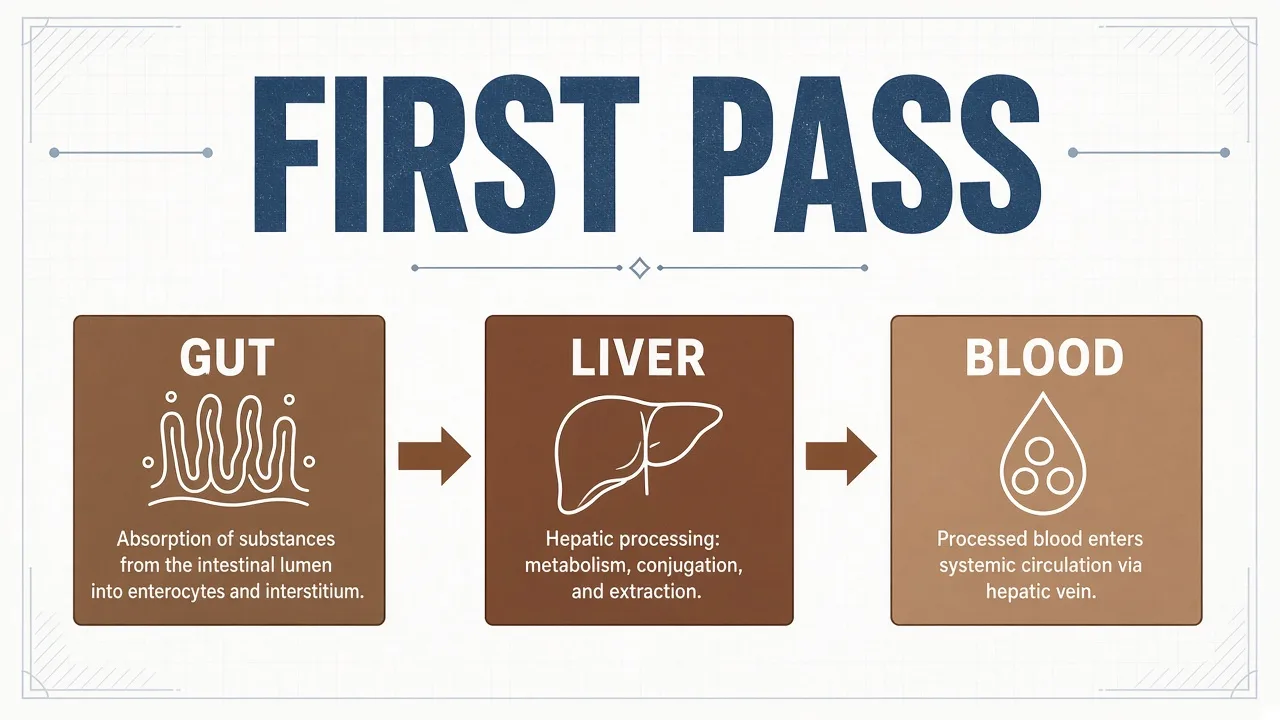
Search results love a mnemonic that ends in a number. The public source is older and dryer. StatPearls’ first-pass effect article is the one to keep open: after an oral dose, the drug is absorbed from the gastrointestinal tract and delivered to the liver via the portal circulation before it reaches the rest of the body. Gut-wall enzymes can start the work. Hepatic enzymes can finish it. The fraction that survives is what the rest of you actually sees.
Read StatPearls, first-pass effect. We will not reprint a dose from a video. If a faculty member named a drug, open that monograph. If the next exam is still an entrance test, sit science on the exam your catalog named, not a crush-the-tablet trick.
The liver is a door, not a footnote
Think of three rooms, in order, for a swallowed tablet that is meant to work in the blood:
- The gut lumen, then the gut wall. Some molecules never get through. Some are changed there.
- The portal vein. Almost all of that absorbed blood goes to the liver first. It does not get a vote.
- The liver, then the hepatic vein, then the vena cava, then the heart, then the rest of you.
That third room is why “oral and IV are the same milligrams” is usually false. The liver can extract a large share on that first look. Later passes still matter. The first one is the one students skip on a drawing.
Bioavailability is a fraction the FDA named
People say “bioavailability” as if it meant “how strong the brand is.” The Food and Drug Administration’s bioavailability definition is colder. Bioavailability is the rate and extent to which the active ingredient is absorbed from a product and becomes available at the site of action. For practical nursing school, the comparison people actually use is the fraction of an extravascular dose that reaches systemic circulation, relative to an intravenous dose of the same molecule. Intravenous bioavailability is 1 by the way the comparison is built. Oral can be far less. That is not a personality of the brand. It is chemistry plus first-pass extraction plus formulation.
Read the live definition in 21 CFR Part 320 when a classmate cites a blog number. We will not invent an F value for a drug we are not administering.
Which routes skip the first pass
| Route | Does it take the portal door first? | What a student should actually say |
|---|---|---|
| Oral (swallowed) | Yes, if it is absorbed from the gut | Gut wall and liver can change it before the rest of the body sees it |
| Intravenous | No | It is already in systemic blood |
| Sublingual or buccal | Mostly no | Absorbed into venous blood that does not go portal first |
| Transdermal, inhaled | No | Different doors. Still not “crush the oral and call it even” |
| Rectal | Partial | Some venous drainage bypasses the liver. Do not treat it as IV |
Lidocaine and nitroglycerin show up in lectures because oral first-pass extraction is so large that those products are not built as ordinary swallowed tablets for the effect students have in mind. That is a teaching example. It is not a license to rewrite an order. If the MAR says intravenous, you do not “make oral work.”
Names students mix up
- First-pass effect is the loss before systemic blood. It is not “the liver later, after the drug already worked.”
- Prodrug is a molecule designed to be changed into the active form. First-pass can activate a prodrug or destroy a parent. Those are not the same sentence.
- Half-life is how the level falls after the body already has the drug. It is not bioavailability.
- Protein binding is what happens in blood after arrival. It is not the portal door.
What not to invent this month
Do not invent a conversion factor because a classmate “always doubles oral.” Do not crush a sustained-release product to feed a tube and call it first-pass science. Do not sit a dump of stolen pharm items. If you need unofficial practice, sit practice questions for the exam in front of you. The Nursier editorial team wrote this. We do not take a pharmacy copay. Those counters keep those payments.
After you can draw the path
Draw three boxes: gut, liver, vein. Write the route from the MAR on the line that is actually ordered. If you cannot say whether that route meets the portal vein first, you are not ready to explain the dose difference. Close the “easy trick” tab. A trick is not a monograph.
Common questions
Does every oral drug have a huge first-pass loss?
No. First-pass extraction varies by molecule, by gut and liver enzymes, by blood flow, and by formulation. The point is the path, not a national percentage.
If IV is 100 percent, is oral always weaker?
Oral can deliver less of the parent drug to systemic blood. That is why doses and onsets differ. It is not a moral ranking of routes. The order names the route for a reason.
Can I give oral if the IV is delayed?
Not because a blog explained first-pass. An order change is a prescriber’s act. NPO status, swallowing, and the product’s form still win.
Is this the same as the RAAS pathway?
No. First-pass is what happens to a swallowed drug. RAAS is a hormone cascade that changes vessels and sodium. They can sit in the same week of patho. They are not the same drawing.
Sources
Nursier is independent. We are not affiliated with NCBI, FDA, or any pharmacy. This article is planning copy for students and nurses. It is not a monograph, not a dose, and not an order.