The RAAS pathway, one molecule at a time
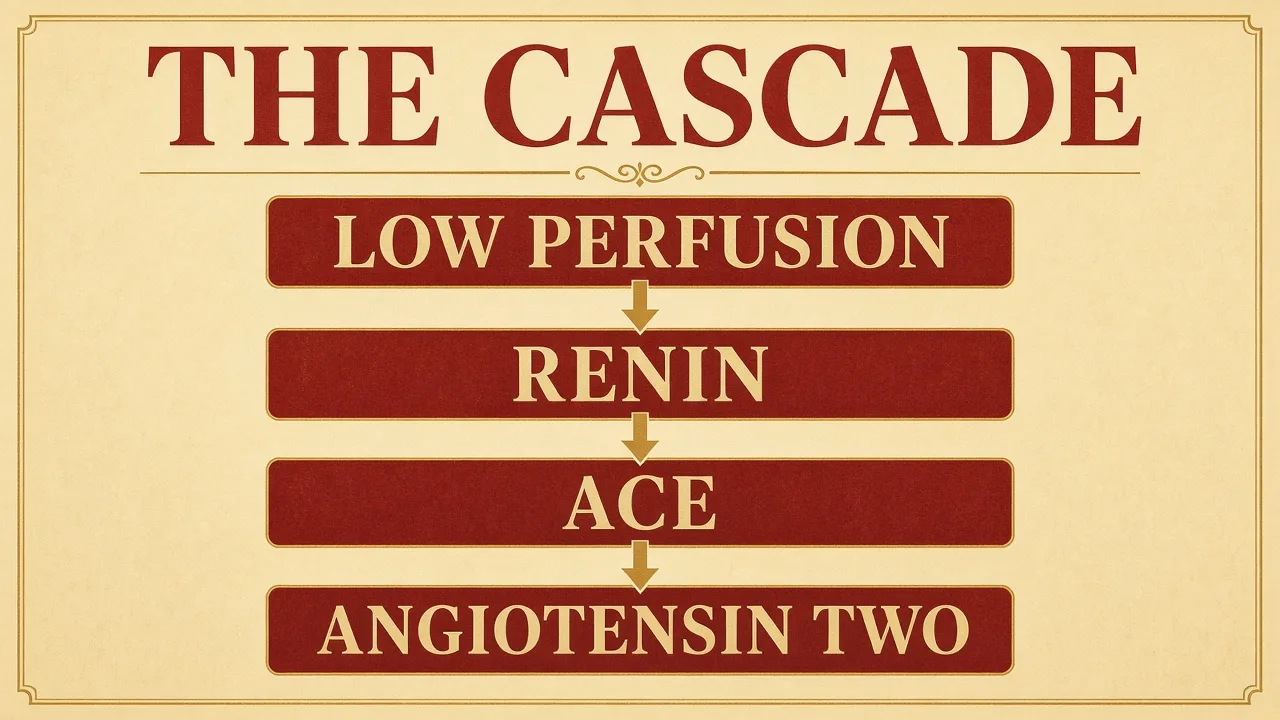
The renin–angiotensin–aldosterone system is the cascade the body uses when kidney perfusion falls. Juxtaglomerular cells release renin. Renin cuts liver-made angiotensinogen into angiotensin I. ACE, sitting in endothelium (often lung), cuts that into angiotensin II. Angiotensin II constricts vessels and tells the adrenal zona glomerulosa to release aldosterone, which keeps sodium. If you can say the next molecule without a four-color Memphis poster, you can sit the item.
This guide walks the cascade, the three renin triggers, what angiotensin II does in the same hour, and why ACE inhibitors and ARBs show up on exams. It will not rank brands. Keep first-pass on the liver before the vein. Keep NCLEX on nine ways that match the test plan.
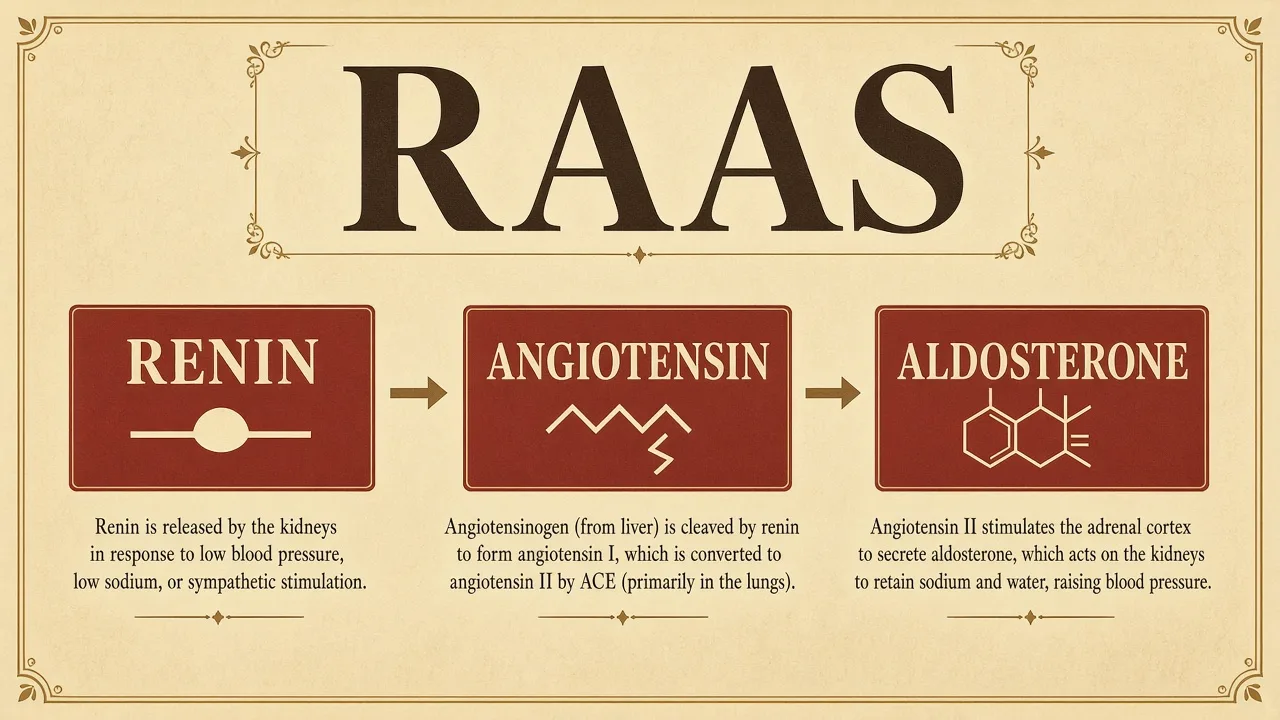
How to walk the RAAS cascade in order
RAAS is a named axis: renin–angiotensin–aldosterone. StatPearls’ physiology article is the public spine. The system defends arterial pressure and extracellular sodium when perfusion falls. It is not a personality of “stress.” It is not “the kidney makes blood pressure” as a single verb. Read StatPearls, physiology, renin angiotensin system before you trust a pastel flowchart with a cute hat on the adrenal.
What actually releases renin
Renin comes from juxtaglomerular cells in the afferent arteriole. Three classic signals sit in every honest lecture:
- A drop in renal perfusion pressure, sensed in that arteriole.
- A drop in sodium chloride delivery at the macula densa of the distal tubule.
- Sympathetic stimulation through β1 receptors on those same cells.
Renin is an enzyme, not a hormone that constricts vessels by itself. Its job is to cut angiotensinogen. If you cannot say “enzyme,” you will miss the item that asks why renin is not the pressor.
Angiotensinogen to aldosterone
| Step | Molecule or enzyme | Where it is made or sits | What it does next |
|---|---|---|---|
| 1 | Angiotensinogen | Liver | Circulates as the substrate |
| 2 | Renin | Juxtaglomerular cells | Cuts angiotensinogen to angiotensin I |
| 3 | Angiotensin I | Plasma | Inactive decapeptide. Not the pressor students name |
| 4 | ACE | Endothelium, much of it in lung | Cuts I to angiotensin II |
| 5 | Angiotensin II | Plasma, acting on AT1 receptors | Constricts, and asks for aldosterone |
| 6 | Aldosterone | Zona glomerulosa of the adrenal cortex | Keeps sodium, loses potassium and hydrogen |
What angiotensin II does in the same hour
Angiotensin II is the octapeptide people mean when they say “the RAAS constricts.” It acts fast on vascular smooth muscle. It also:
- Stimulates aldosterone from the zona glomerulosa.
- Increases proximal sodium reabsorption.
- Stimulates thirst and ADH release.
- Raises sympathetic tone.
Aldosterone is slower. It writes sodium channels and pumps in the collecting duct. The person keeps sodium and water. They can lose potassium and hydrogen. That is why a lecture that stops at “ACE pill, blood pressure down” skips the electrolyte item you will actually sit.
Why ACE and ARB show up on exams
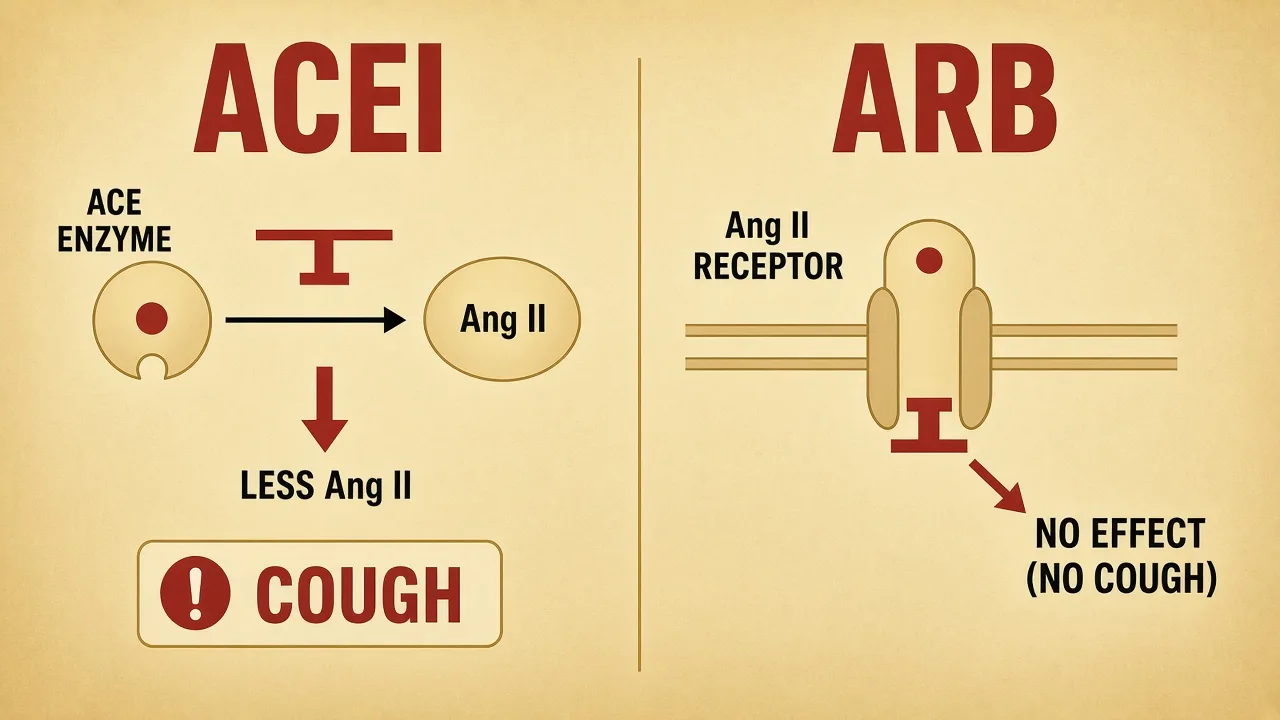
ACE inhibitors block the enzyme that makes angiotensin II. They also reduce the breakdown of bradykinin. A dry cough is the teaching point that belongs to that second fact. It is not a ranking of brands. It is not a promise that every person coughs. ARBs block the AT1 receptor. They do not use the same bradykinin story. We will not invent a first-line brand or a starting milligram. If the MAR names a drug, open that monograph and the order.
What not to memorize as a ranking
Do not memorize a “best ACE inhibitor.” Do not treat RAAS as the only pressure system. Baroreceptors and ADH still exist. If you need unofficial practice, sit practice questions for the exam in front of you. The Nursier editorial team wrote this.
After you can name the next molecule
Cover the table. Say: angiotensinogen, renin, I, ACE, II, aldosterone. Name the cell, the liver, the endothelium, the zona glomerulosa. Then close the rainbow poster. We do not take a clinic copay. Those offices keep those payments.
Common questions
Does the kidney “make” angiotensin II?
The kidney releases renin. The liver makes angiotensinogen. ACE, much of it in lung endothelium, makes angiotensin II. “The kidney” is not one verb.
Is ACE only in the lung?
A large share of converting enzyme sits in pulmonary endothelium. ACE also sits in other vascular beds. The exam still wants “endothelium,” not “the alveolus invented pressure.”
Why do people lose potassium on aldosterone?
Aldosterone increases sodium reabsorption in the collecting duct. Potassium and hydrogen are secreted in that trade. That is the electrolyte item, not a brand ranking.
Is this the same as first-pass metabolism?
No. First-pass is what a swallowed drug meets in gut and liver. RAAS is a hormone axis. Same week of patho. Different drawing.
Sources
Nursier is independent. We are not affiliated with NCBI or any drug maker. This article is planning copy for students. It is not a monograph, not a dose, and not an order.